Picture this: it is the middle of winter, the wind is howling outside, and rain is aggressively lashing against your windows. Suddenly, with a sharp click, your entire home plunges into total darkness. The comforting hum of your fridge fades, your Wi-Fi router drops off, and, worst of all, your central heating begins to cool. If you live in the UK, this daunting scenario is likely becoming frustratingly familiar.
In recent years, we have seen an alarming increase in severe weather events. From the devastating impacts of Storm Arwen and Storm Eunice to the unpredictable winter blasts of early 2026, power outages are hitting harder and lasting longer. Tens of thousands of households have found themselves entirely disconnected from the grid, sometimes for days at a time. During these critical moments, losing power is not just an inconvenience; it can mean freezing temperatures indoors, spoiled food, and a complete inability to work from home.
This growing unreliability is exactly why backup generators are rapidly shifting from being a luxury item to an absolute essential for British households. Having an independent power source means that when the grid goes down, your life need not stop. You can keep your essential appliances running, ensure your family stays warm, and keep the lights on until normal service is restored.
If you are currently wondering how to use a generator to power your house in the UK, you have landed in exactly the right place. Navigating the world of home generators can initially feel a bit overwhelming, especially when faced with technical jargon and strict UK electrical regulations. But don’t worry, we are here to simplify the process.
Why UK Homes Need Whole-House Generators
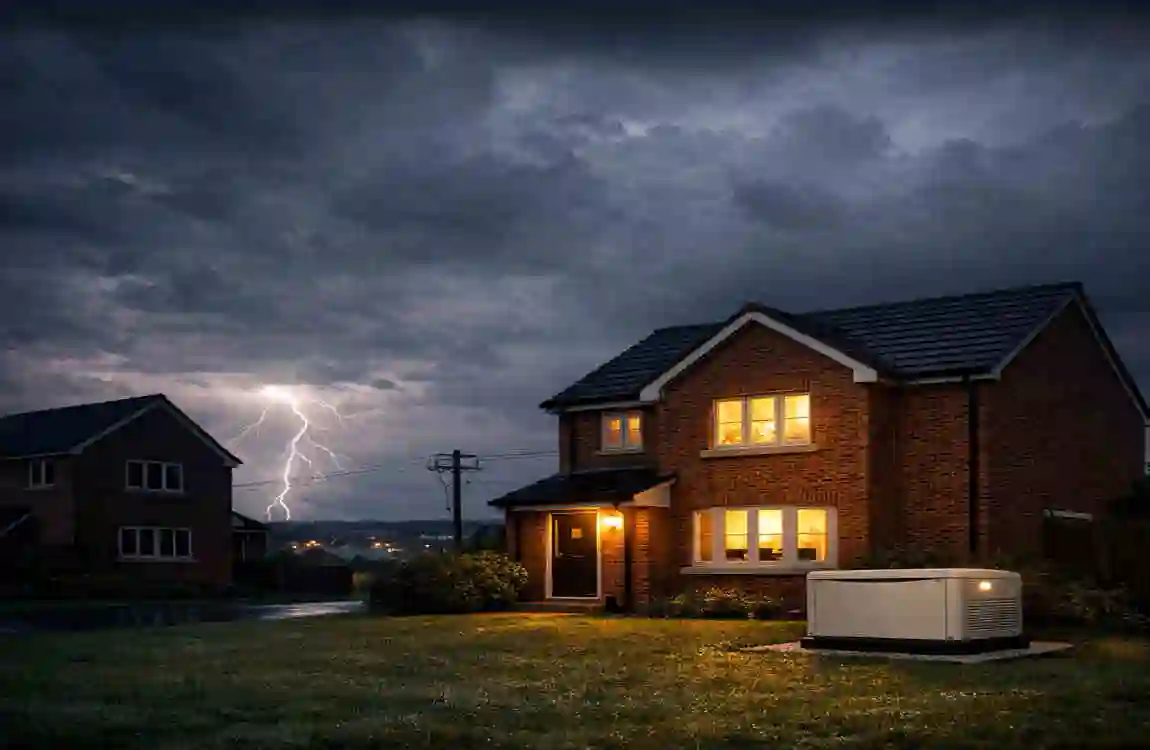
When we think of power cuts, we often picture a minor blip that lasts for a few minutes while the grid resets. However, the reality facing the UK power infrastructure today is far more complex. The combination of an aging electrical grid, the rapid transition to renewable energy sources, and increasingly volatile climate events has put immense strain on our national power supply. Winter storms are bringing down power lines with alarming regularity, making long-term blackouts a real threat for both rural and urban homes.
This growing uncertainty is exactly why investing in a backup power solution is such a smart move. When exploring your options, you will generally come across two main categories: portable generators and standby (whole-house) generators.
Portable units are fantastic for running a few specific appliances via extension cords. However, if you want true peace of mind, a standby whole-house generator is the ultimate solution. These robust systems are permanently installed outside your luxury home and wired directly into your electrical panel. When the grid fails, they automatically detect the outage and kick in within seconds. For larger UK properties, particularly those in rural areas or farms, you can even explore three-phase generator options to handle significant electrical loads without breaking a sweat.
Let’s talk about the financial side of things. While purchasing a generator involves an upfront investment, the long-term cost savings can be substantial. Think about a prolonged blackout lasting two or three days. Without power, you might be forced to pack up your family and check into an expensive local hotel to stay warm. Add in the cost of replacing hundreds of pounds worth of spoiled food from your defrosted freezer, plus the potential loss of income if you work from home, and the expenses quickly spiral. A home generator eliminates these emergency costs.
Ultimately, learning how to power your home with a generator safely in the UK gives you ultimate control over your home’s environment. You are no longer at the mercy of the elements or the local utility company. You gain the invaluable assurance that, regardless of what is happening outside, your family remains safe, warm, and comfortable inside.
Choosing the Right Generator Size
One of the most common mistakes homeowners make is buying a generator without properly calculating their electrical requirements. If you choose a unit that is too small, it will trip out and fail to run your appliances. If you buy one that is too large, you will waste money on the initial purchase and burn through fuel unnecessarily.
To find your perfect match, you need to understand two key terms: Running Watts and Starting Watts.
Running Watts (or continuous watts) refer to the power an appliance needs to run steadily. Starting Watts (or surge watts) represent the brief, extra burst of power required to start up appliances with electric motors, like your fridge or a heat pump. Think of it like pushing a heavy car; it takes a lot of effort to get it moving initially, but much less effort to keep it rolling.
To calculate your exact needs, list out the essentials you cannot live without during an outage (typically totaling between 500-2000W) and the non-essentials you’d ideally like to run (which can push your needs to 3000W+).
Here is a simplified example of how you might calculate the wattage for a standard emergency setup:
Appliance Running Watts Starting Watts
Fridge/Freezer 700W 2200W
LED Lights (10x) 600W –
Electric Space Heater 1500W –
Total Example Needs 2800W 4200W
In this example, your generator must be able to handle a continuous load of 2800W. Still, it absolutely must have a surge capacity of at least 4200W to handle the moment the fridge compressor kicks in.
For the average UK family luxury home, experts generally recommend a generator in the 5000W to 10,000W range. This sweet spot provides enough juice to run your central heating boiler, a fridge, your Wi-Fi router, multiple lights, and a few luxury items like a television or a kettle, without putting the system under dangerous strain.
Types of Generators for UK Homes
Once you have determined the size you need, the next step is choosing the right type of generator. The market is flooded with various models, but they generally break down into three main fuel categories: diesel, petrol, and natural gas.
Diesel generators are the heavy-duty workhorses of the backup power world. They are incredibly fuel-efficient, have a long lifespan, and are generally safer to store fuel for than petrol. Petrol generators, on the other hand, are typically more affordable upfront and highly portable, making them a popular choice for budget-conscious homeowners. Finally, Natural Gas generators tie directly into your home’s mains gas supply. This means you never have to worry about refilling a fuel tank in the middle of a storm, and they tend to run much quieter.
Here is a quick breakdown to help you compare your options:
TypeProsConsBest For
Portable, affordable, easily movable, great for quick deployment. Manual start required, can be noisy, and has a limited fuel tank: small homes or a budget emergency backup.
Standby Auto-start functionality, seamless transition, infinite fuel (if gas). Expensive to buy and install, but a permanent fixture: whole-house coverage and ultimate peace of mind.
Inverter: Super quiet, highly fuel-efficient, produces “clean” power. Generally, lower power output is more expensive per watt. Running sensitive electronics (laptops, TVs) and essentials.
When shopping for a generator in the UK, it is absolutely vital to stress compliance. You must look for models that comply with BS EN 61000 standards. This ensures the generator produces clean, stable electricity (often referred to as a pure sine wave). Without this compliance, the fluctuating power can instantly fry sensitive electronics like your expensive modern boiler’s circuit board, your laptop, or your smart TV.
Legal and Safety Regulations in the UK
We cannot talk about powering your home without addressing the strict legal and safety landscape in the UK. Messing with mains electricity is not a weekend DIY project; it involves serious regulations designed to keep you, your property, and grid workers safe.
First and foremost, any fixed electrical installation in a UK home must comply with BS 7671 (the IET Wiring Regulations). Furthermore, the work must be signed off by a Part P-certified electrician. This is a legal requirement under UK Building Regulations. Attempting to hardwire a generator into your consumer unit without the proper qualifications is not only illegal, but it can also invalidate your home insurance and put your life at risk.
When it comes to permits, the rules are relatively straightforward. For a fixed standby generator, you may need to consult your local council regarding planning permission, especially if you live in a listed building or a strict conservation area. Noise regulations are also a factor, so placing a loud diesel generator right next to your neighbor’s fence might prompt a visit from environmental health. However, for portable generators under 1MWth (which covers virtually all home units), you generally do not need an environmental permit.
Carbon Monoxide (CO) poisoning is another critical danger to be aware of. Generators produce high levels of this invisible, odorless gas. You must never run a generator inside a house, garage, shed, or any enclosed space. The strict rule of thumb is to ensure the generator is placed outdoors, with plenty of ventilation, and positioned at least 5 to 10 feet away from any open windows or doors.
Lastly, and perhaps most importantly, UK law mandates the use of a transfer switch for any generator connected directly to your home’s wiring. This device isolates your home from the national grid while the generator is running. Without it, you risk “backfeeding”—where the electricity from your generator flows backward into the national grid lines. This is incredibly dangerous and can easily electrocute a utility worker who is trying to repair the power lines down the street.
Step-by-Step: Safely Connecting to Your House
Now that we have covered the rules and the hardware, let’s get down to the practical application. Understanding how to safely use a generator to power your house in the UK is all about following a strict, repeatable procedure.
Shut Off the Mains Breaker
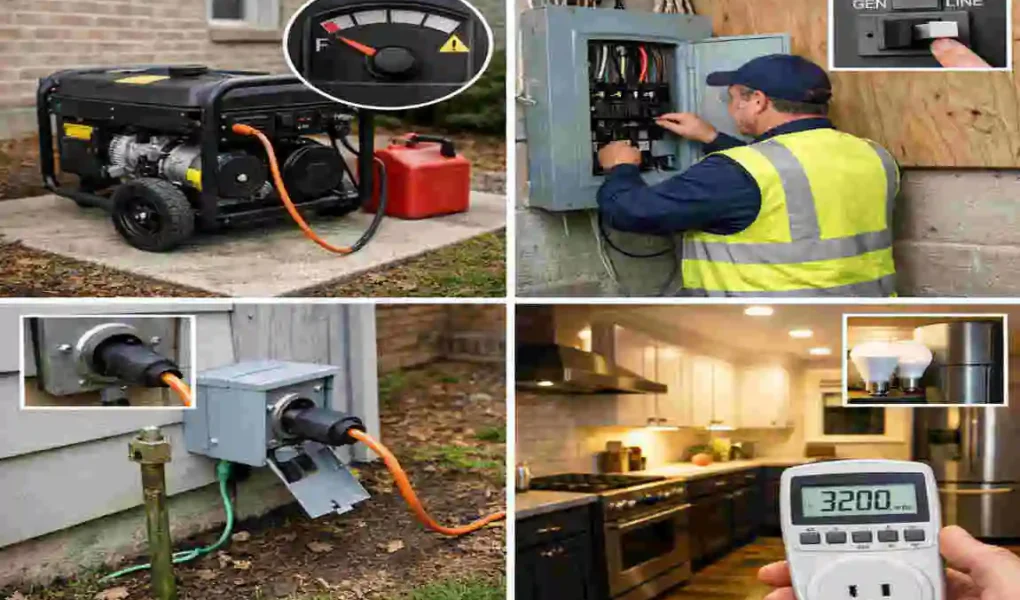
Before you even touch your generator, head straight to your home’s consumer unit (fuse box). You need to locate the main isolator switch and flip it to the “OFF” position. This physically disconnects your house from the national grid. This step ensures that your generator’s power stays within your home and guarantees total safety against electrical surges.
Engage the Transfer Switch
Next, you will need to engage your transfer switch. If you have an automatic transfer switch (ATS) connected to a standby generator, this entire process happens independently without you lifting a finger. However, if you are using a portable generator, you will have a manual transfer switch. Flip this switch from the “Mains” or “Line” position over to the “Generator” position.
Connect via the Inlet Box
With the transfer switch set, it is time to hook up the machine. Your electrician will have installed a weatherproof inlet box on the exterior of your home. Plug one end of your heavy-duty generator cable securely into the generator. Then, plug the other end directly into the wall-mounted inlet box. Ensure both connections are firmly twisted and locked into place to prevent them from vibrating loose during operation.
Ground the Generator Properly
Electricity always seeks the path of least resistance to the ground. If your generator is not properly grounded, that path could end up being you. Most modern portable generators have the frame tied to the ground. Still, you should always verify the grounding requirements in your specific manufacturer’s manual. If an external grounding rod is required by the manufacturer or by your electrician, ensure it is firmly driven into the earth and securely clamped to the generator’s grounding terminal.
The Final Test Sequence
Now you are ready for a startup.
- Ensure all individual circuit breakers on your transfer switch are turned off.
- Step outside and start the generator according to the manufacturer’s instructions (usually turning on the fuel valve, applying the choke, and pulling the recoil cord or pressing the electric start button).
- Let the generator run for a few minutes to warm up and stabilize its power output.
- Head back inside to your transfer switch and begin turning on the essential circuits one at a time. Start with the appliance that requires the most starting watts (like your fridge), let it settle, and then move on to your lights and heating.
Following this sequence prevents you from overloading the generator with a massive power surge right off the bat, ensuring safe, whole-house power until the grid is restored.
Maintenance for Longevity
Buying a generator is exactly like buying a car; if you do not service it, it will eventually let you down. The last thing you want is to drag your generator out during a freezing midnight blackout, only to find the engine is seized or the battery is dead.
To ensure your investment lasts for years and operates safely when you need it most, you must commit to a routine maintenance schedule. Here is your essential UK homeowner’s generator maintenance checklist:
- Conduct routine visual checks: Walk around your generator every month. Look for any signs of leaking oil, frayed wires, or loose connections. Keeping it clean prevents dirt from getting sucked into the air filter.
- Perform monthly load tests: Do not just turn it on and let it idle. Fire it up once a month and plug in a heavy load (like a space heater) for about 20 minutes. This ensures the alternator is actually producing electricity and keeps the internal components lubricated.
- Stay on top of battery maintenance: If your generator has an electric start, that battery needs to be trickle-charged. Check the terminals for corrosion and ensure they have sufficient voltage to guarantee an instant start in cold weather.
- Manage your fuel storage: Fuel goes stale. Petrol can degrade in as little as three months, gumming up your carburetor. Always use a fuel stabilizer when storing petrol. Diesel generally lasts longer (6 to 12 months) but is susceptible to “diesel bug” (bacterial growth) in damp UK weather. Rotate your fuel regularly.
- Prepare for the UK Winter: Before the storm season hits, change the oil, replace the spark plug, and clean the air filter. Use a winter-grade oil if your manufacturer recommends it, as cold weather can make standard oil too thick to protect the engine during a cold start.
Top UK Generator Picks
If you are currently in the market, the sheer volume of choices can be dizzying. Based on current market trends, reliability, and UK compliance, here are some of the top picks for 2026.
If you are looking for the gold standard in portable inverter technology, the Honda EU70iS remains an exceptional choice. Honda is legendary for its engine reliability. This specific model provides 7000W of incredibly clean power, making it entirely safe for your laptops, smart home devices, and modern boilers. Best of all, it features an electronic fuel injection system and is exceptionally quiet, meaning you won’t annoy your neighbors.
If you want a more permanent, rugged solution, Hyundai’s range of Diesel Standby Generators (such as the DHY8000SELR) is incredibly popular in the UK. Designed with a massive fuel tank and housed in a silenced acoustic canopy, these units are built to run continuously for days. They are perfect for larger homes or rural properties that suffer from frequent, multi-day outages.
When it comes to your buying guide, expect to pay anywhere from £500 for a basic portable unit up to £5,000+ for a high-end standby model.
Where should you buy? Avoid obscure overseas websites. Stick to reputable UK suppliers. Screwfix offers excellent, accessible options for smaller portable units with great return policies. For larger investments, Amazon UK features official storefronts for brands like Champion and EcoFlow. However, for fixed standby generators, it is often best to consult specialized dealer networks that offer bundled purchase-and-installation packages, ensuring you get full warranty support.
Cost Breakdown and ROI
Let’s look at the financial reality of keeping the lights on. The initial purchase price of the unit is only part of the equation.
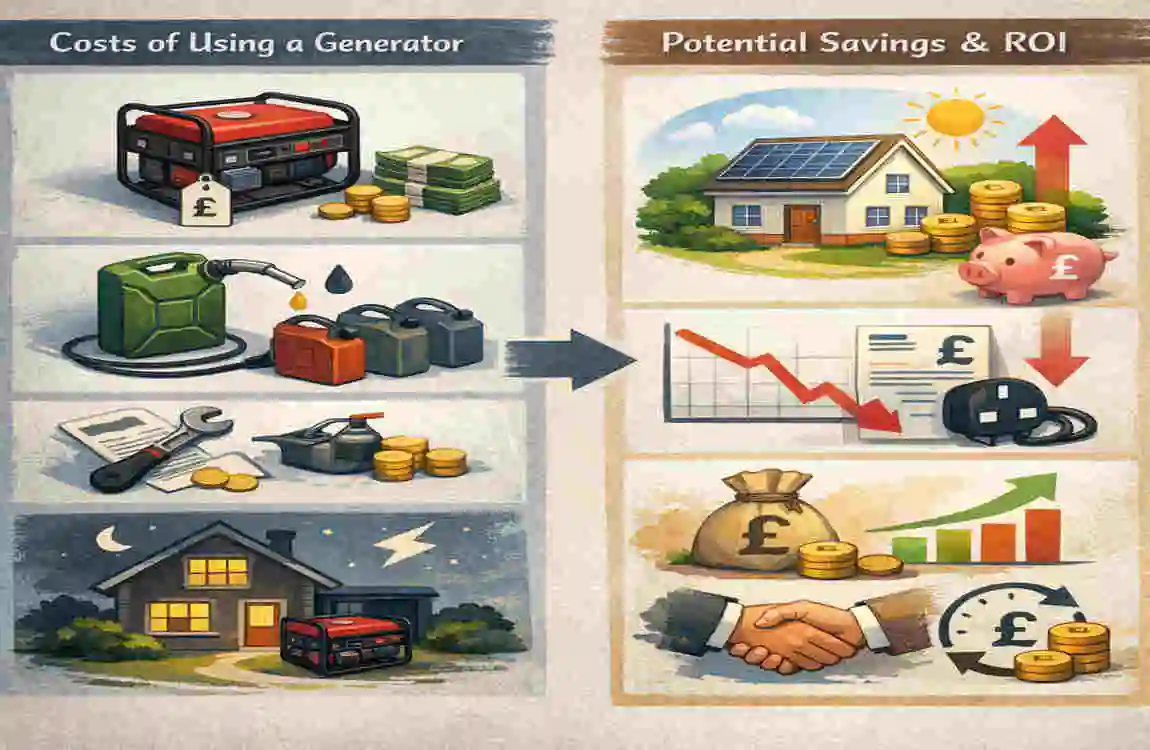
If you are opting for a safe, legal connection via a transfer switch, you must budget for the initial installation costs. Hiring a Part P electrician to wire the inlet box, install the transfer switch, and sign off on the safety certificates will typically cost between £800 and £1,500+, depending on the complexity of your home’s wiring.
As for running costs, fueling a generator under load generally costs between £5 and £10 per hour, depending on current petrol or diesel prices and the unit’s efficiency.
While this might sound steep, you must calculate your Return on Investment (ROI) based on avoided disasters. A three-day blackout could easily result in £200 worth of ruined freezer food, £400 in emergency hotel accommodation, and potentially hundreds of pounds in lost productivity or burst, frozen pipes. In many cases, a reliable generator pays for itself entirely during its first major winter storm deployment. If the upfront cost is daunting, many dedicated generator installers in the UK now offer attractive financing tips and monthly payment plans to spread out the investment.
FAQs
Can I DIY the generator installation to save money? Absolutely not. Any fixed electrical work connecting a generator to your home’s consumer unit must be carried out and certified by a competent Part P-registered electrician. Doing it yourself is illegal, dangerous, and voids your home insurance.
How long does generator fuel actually last? Untreated petrol can begin to degrade in just 3-4 months. Diesel can last between 6 and 12 months before requiring polishing or replacement. Always use a high-quality fuel stabilizer to extend the shelf life of your emergency reserves.
Can a backup generator run my combi boiler? Yes, but you must be careful. Modern combi boilers have highly sensitive electronic circuit boards. You must ensure your generator produces a “pure sine wave” (like an inverter generator) to prevent damaging the boiler’s electronics.
Is a transfer switch really required? Yes. A transfer switch is legally mandatory in the UK for a whole-house connection. It is the only way to safely isolate your home from the grid and prevent deadly backfeeding.
Can I run the generator in my garage with the door open? No. Carbon monoxide is a silent, invisible killer that can quickly build up and seep through internal doors. Generators must always be operated outdoors, well away from windows and vents.