
Picture this: It is right after the heavy monsoon season in Lahore. You have just had essential plumbing repairs completed to address the damage from the relentless rains. You walk into your bathroom, ready to wash your hands, and turn the faucet. Instead of a smooth, calming stream of water, you are blasted with a violent, spitting mix of air and water that splashes all over your shirt.
If this sounds familiar, you are not alone. Sputtering faucets and banging pipes are incredibly common household headaches. These alarming noises and chaotic water flows are usually caused by a simple problem: trapped air in your plumbing system.
When air gets locked inside your home’s water lines, it acts like an invisible roadblock. It blocks the normal flow of water, leading to annoying noises, wildly fluctuating water pressure, and significant frustration.
| Step | Action | Details & Tips | Time Estimate | Tools Needed |
|---|---|---|---|---|
| Shut off main water valve | Locate valve near meter or basement; turn clockwise fully to stop flow and relieve pressure. Drain any residual water from lowest faucet. | 2-5 min | None | |
| Open all faucets halfway | Start closest to main valve (kitchen/bathroom), work outward. Open hot/cold on sinks, showers, outdoor spigots, laundry—halfway for air escape paths. | 5 min | None | |
| Drain pipes fully | Run faucets until sputtering stops and flow dries (10-15 min). Flush all toilets 2-3 times to clear tanks and lines. | 10-15 min | Bucket for catch | |
| Turn water back on | Slowly open main valve counterclockwise. Run all faucets full blast to purge remaining air bubbles. | 5-10 min | Wrench if stiff | |
| Close faucets in reverse | Start farthest from valve (e.g., upstairs shower), close hot/cold methodically toward main line to push out lingering air. Test pressure. | 5 min | None |
What Causes Air in Home Water Pipes?
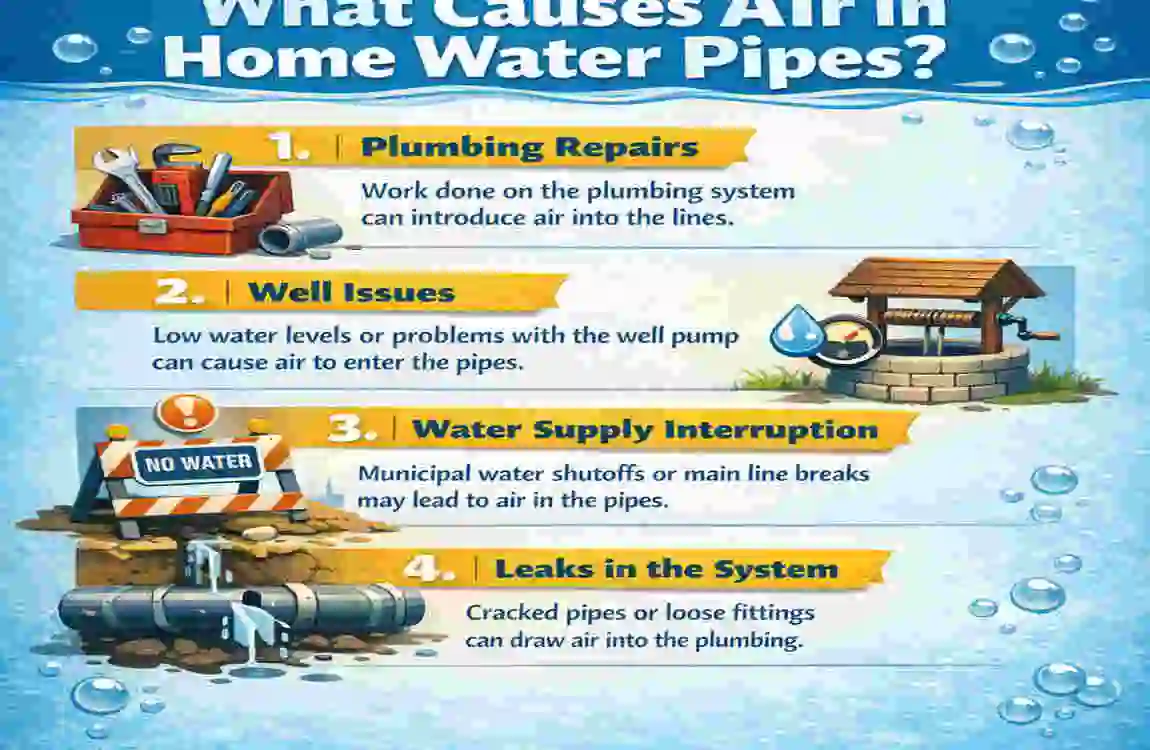
Before we jump into the fix, it helps to understand how the air got into your closed plumbing system in the first place. Your home’s water pipes are designed to be sealed. When that seal is broken, or when the system is drained, air sneaks in.
Let’s break down the most common culprits behind air entering your home’s water lines.
Recent Pipe Work or Winterization: Whenever you turn off your main water supply for a repair, water drains from the pipes. What replaces that space? You guessed it: air. When you turn the water back on, that air gets pushed forward and trapped behind the new water flow. The same thing happens if you drain your pipes to prepare for freezing winter temperatures. When the season changes and you refill the system, air locks are incredibly common.
Issues with Your Well Pump: If you live in a rural area or in a part of Lahore that relies on a private well, your pump might be the troublemaker. During dry spells, the water level in your well can drop significantly. When this happens, the pump might start sucking in air along with the water. Additionally, a failing check valve on the well pump can allow air to seep into the lines when the pump cycles off.
Sudden Pressure Drops Sometimes, the issue originates outside your home. If there is a massive water main break in your neighborhood, or if the city is flushing fire hydrants, the sudden drop in water pressure can draw air into the municipal lines. That air then travels straight into your house’s plumbing.
Leaky Fixtures and Valves. Even tiny, barely noticeable leaks can cause big problems. A slightly loose valve or a degrading seal might not leak much water out. Still, it can allow a slow, steady stream of air to be sucked into the pipes, eventually forming a massive airlock.
Common Causes vs. Symptoms
To help you diagnose your specific issue, take a look at this handy breakdown of causes, symptoms, and how they impact your daily life.
CauseSymptomsHouse Impact
Post-repair air entry, intense sputtering, and loud banging noises right after turning the water back on—major disruption in kitchen and bathroom routines.
Faulty well pump. Consistently low water pressure and intermittent, pulsating water flow. Constant annoyance for homes relying on private wells.
Leaky fixtures, faint gurgling sounds behind walls or near faucets, even when turned off. Higher water bills and potential long-term water damage.
Signs You Have Air in Your Water Pipes
How do you know for sure that air is your problem? It is important to spot the issues early before the intense vibrations damage your plumbing joints. You want to differentiate an air lock from other common issues, such as a hidden leak or a mineral clog.
Here are the undeniable red flags to watch out for:
- The Sputtering Faucet: This is the most obvious sign. When you turn on the tap, the water forcefully spits and splashes, rather than flowing in a steady, unified stream.
- Reduced Water Pressure: If your morning shower feels more like a weak drizzle, an airlock might be preventing the water from flowing at its full, normal capacity.
- Loud Pipe Hammering: Do you hear aggressive banging, clanking, or vibrating sounds behind your walls when you run the washing machine or flush a toilet? This is called “water hammer.” The trapped air compresses and expands, violently shaking your pipes.
- Prolonged Gurgling: If your drain or faucet continues to gurgle long after you have turned the water off, trapped air is likely trying to find a way to escape.
If you are dealing with a clog, you will usually only see low pressure at one specific faucet. If you leak, you will likely see water stains or a spike in your bill. But if you have sputtering and banging all over the house, you are definitely dealing with trapped air.
Tools Needed for the Fix
One of the best things about clearing an air lock is that you do not need a truck full of expensive, specialized equipment. You likely already have everything you need sitting in your garage or utility closet.
Here is your simple checklist of essentials:
- A Standard Wrench: You might need this to loosen a stubborn main water valve if it has not been turned in a few years.
- A Large Bucket: Keep a bucket handy to catch water if you need to drain a specific line or check a low-hanging outdoor spigot.
- Towels or Rags: It is always a good idea to have some dry towels or rags nearby to wipe up unexpected splashes quickly.
- A Water Pressure Gauge (Optional): While not strictly required, a cheap pressure gauge that attaches to your outdoor hose bib can help you verify that your water pressure has returned to normal after you finish the fix.
That is it! No fancy gear or heavy machinery is required for standard house systems. Now, let’s get down to business.
Step-by-Step: How to Remove Air from Water Pipes in the House
This is the core of our guide. We are going to walk you through the ultimate, foolproof method for flushing air out of your entire plumbing system.
Take your time, follow these steps exactly in order, and do not rush the process. Let’s get that water flowing smoothly again!
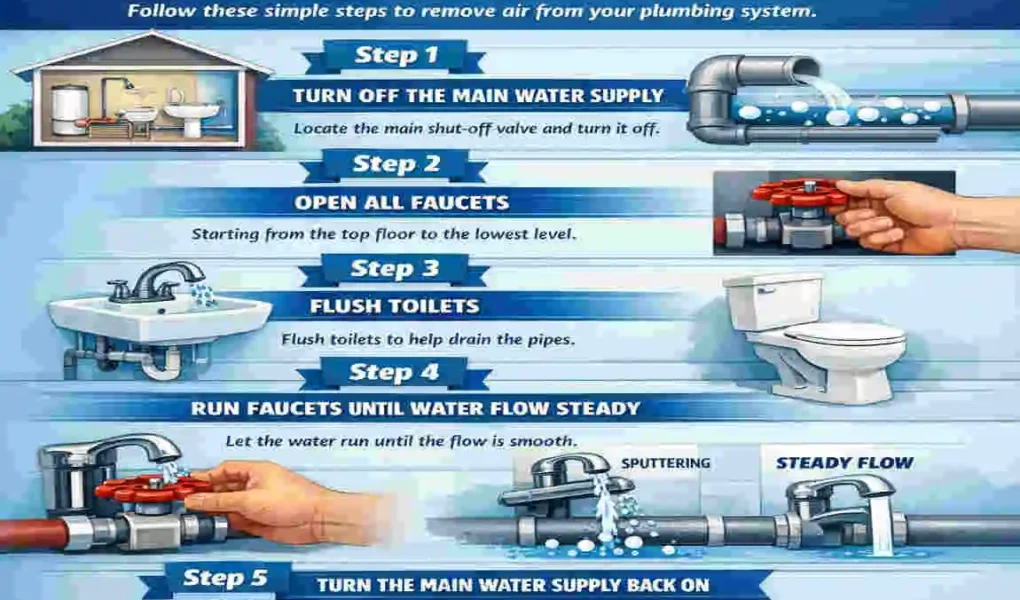
Shut Off the Main Water Valve
Your first mission is to find your home’s main water shut-off valve.
If you live in a warmer climate, this valve might be located outside, near the street, or attached to an exterior wall. If you live in a colder area, it is likely indoors—usually in a basement, a crawl space, or a utility closet near your water heater.
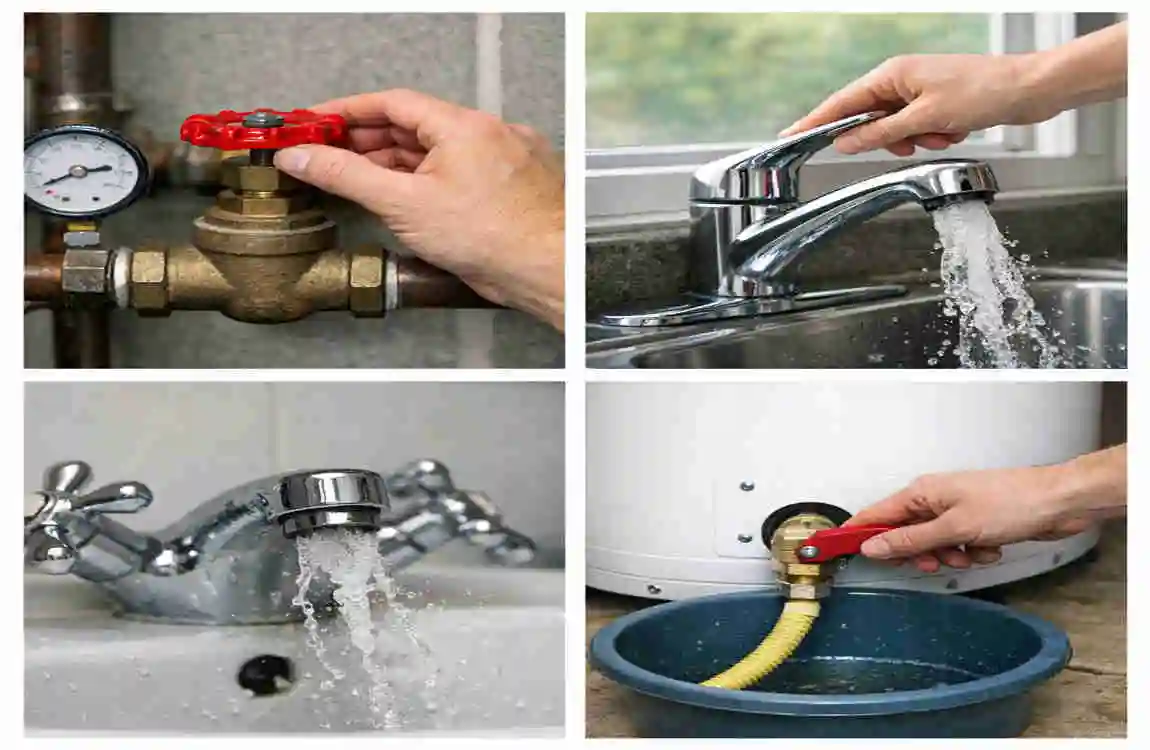
Once you find the valve, turn it clockwise until it’s fully closed to shut off the water supply to your entire house. If it is a lever-style valve, turn the handle so it is perpendicular (crossing) the pipe.
After the main water is off, walk to the lowest faucet in your home—perhaps a basement sink or an outdoor spigot on the ground floor. Open it up completely to let any residual water drain out of the main line.
Open All Faucets Halfway
Now, you are going to take a walking tour of your entire home. Your goal is to give the trapped air an easy escape route.
Start at the faucet closest to the main water valve, then work outward and upward. Go to every single sink, shower, and bathtub in the house. Turn both the hot and cold water knobs to the halfway position.
Do not forget the easily missed fixtures! You must also turn on:
- Outdoor hose spigots
- The washing machine (start a warm water cycle so both lines open)
- The dishwasher (start a quick rinse cycle)
- Refrigerator water dispensers
By opening everything halfway, you create an open, unpressurized system where air can be pushed out easily without having to fight closed valves.
Drain Pipes Fully
With all the faucets open, let the system drain completely.
Wait patiently for about 10 to 15 minutes. You will likely hear a lot of hissing, gurgling, and dripping. This is a great sign! It means the air is shifting and moving out of the pipes.
During this waiting period, walk into every bathroom and flush all the toilets two or three times. You want the toilet tanks to drain empty.
You must wait until all sputtering stops and the water slows to an absolute trickle or stops entirely. Rushing this step will leave water in the pipes, trapping air.
Restore the Water Supply
Now it is time to bring the system back to life.
Walk back to your main water shut-off valve. Slowly and gently, turn the valve counterclockwise to turn the water back on. If you have a lever valve, slowly pull it until it is parallel with the pipe.
Do not crank it open instantly! Turning it too fast can send a massive water shockwave through your empty pipes, potentially causing new airlocks or even damaging your plumbing joints.
Once the main valve is fully open, let the water flow through all of your half-open faucets for another 10 to 15 minutes.
You will hear a lot of noise during this phase. The fixtures will spit, cough, and blast air from their pockets. Let them run. You are watching the water forcefully purge the remaining air from the system.
Close Faucets in Reverse Order
Once the water is running smoothly, clearly, and steadily from every single fixture, the air is officially gone! Now you need to close down the system.
Here is the secret trick: You must close the faucets in the reverse order that you opened them.
Start with the faucet that is the highest up and the furthest away from the main water valve (like a second-story guest bathroom shower). Turn it off. Then slowly walk back through the house, closing faucets as you move closer to the main valve.
Close the washing machine, the dishwasher, and finally, the outdoor spigot or basement sink nearest the main line.
By closing them in reverse order, you ensure that any remaining microscopic air bubbles are pushed down the line and out the final open faucet, rather than getting trapped in a dead end.
Advanced Fixes for Stubborn Air Locks
Most of the time, the full-house drain method outlined above will fix the problem perfectly. But what if you have a particularly stubborn air block in one specific pipe that refuses to budge?
Here are two advanced tricks you can try:
The Washing Machine Hose Method: If you have an airlock specifically in your hot water line, you can use your washing machine connections to blast it out. Turn off the water valves behind your washing machine. Disconnect the hot and cold hoses from the machine and connect them using a double male hose adapter. Turn on both the hot and cold valves at the wall. Because cold water pressure is usually slightly higher, it will force its way into the hot water line, pushing the trapped air bubble backward and out through the nearest open hot water faucet.
The Vacuum Assist for Well Systems. If you have a well system, sometimes draining the pipes isn’t enough because the pump keeps drawing air. You may need to attach a wet/dry shop vacuum to the sputtering faucet. Open the tap, turn on the vacuum, and let it physically suck the stubborn air pocket out of the line while the pump is running.
Troubleshooting Persistent Issues
You followed all the steps perfectly. You drained the system, you flushed the toilets, you patiently waited. But a few days later, your bathroom sink is spitting violently again.
What should you do if the problem is persistent?
First, check for hidden leaks. If air keeps coming back, it means air is actively entering the system from somewhere. Check under every sink, look closely around your water heater, and inspect the ground around your main water line outside. Even a pinhole leak can draw in air.
Second, differentiate between air and sediment. Sometimes, what looks like air is actually dissolved minerals or sediment clogging your faucet aerators. If the water sputters but you do not hear banging in the walls, unscrew the little mesh screen at the tip of your faucet (the aerator). Clean out any grit or calcium buildup and see if the flow improves.
If you have a well, a persistent air problem almost always points to a failing pump, a bad check valve, or a dropping water table. These are complex mechanical issues that usually require professional diagnosis.
Prevention Tips for Your Home
They say an ounce of prevention is worth a pound of cure. Once you have cleared the air from your home water pipes, you want to make sure it stays out.
Here are some proactive habits to adopt:
Do Annual Plumbing Checks. Once a year, take a flashlight and inspect all visible pipes, valves, and connections in your home. Tighten any loose fittings and replace old, degraded rubber washers before they start letting air slip in.
Install a Pressure Regulator. If you live in an area with wildly fluctuating municipal water pressure, consider installing a pressure-reducing valve (PRV) on your main water line. This device ensures that water enters your home at a steady, safe pressure, preventing the sudden drops that draw air into the pipes.
Always Turn Valves Slowly. Whether you are turning on a garden hose or opening your main water valve after a vacation, always turn the handles slowly. Rapidly opening valves creates a sudden rush of water that can trap air pockets.
Lahore-Specific Tip: Monsoon Preparation. If you live in a region like Lahore that experiences heavy, unpredictable monsoons, prepare your plumbing in advance. Heavy rains can shift the ground, putting stress on underground pipes. Ensure your main shut-off valve is well-lubricated and easy to turn so you can quickly shut off your water if a pipe breaks during a storm, minimizing the amount of air that enters the system.
When to Call a Professional Plumber
While DIY fixes are empowering and save money, it is important to know your limits. You should never risk causing major water damage to your luxury home to save a few dollars.
You should absolutely call a licensed professional plumber if:
- You discover a major leak or a burst pipe while looking for the source of the air.
- You are on a well system and suspect pump failure or a broken foot valve deep underground.
- You have tried the full house drain method multiple times. Still, you are experiencing ongoing low pressure or severe water hammer that threatens to break your pipes.
A professional has the diagnostic tools to pinpoint microscopic leaks and the heavy equipment needed to pull and repair deep-well pumps.
FAQs
Still have some lingering questions? Here are the answers to the most common questions homeowners ask about air in their plumbing.
Why is my faucet sputtering so aggressively? Your faucet is sputtering because pockets of trapped air are being forced through a narrow opening along with the water. As the air rapidly expands and escapes from the faucet, the water spits and splashes unpredictably.
How long does it take to flush pipes? The active flushing process usually takes about 10 to 15 minutes of running the water. However, the entire process—including shutting off the main, draining the system completely, and slowly restoring the pressure—usually takes a homeowner about 30 to 45 minutes from start to finish.
Can trapped air damage my plumbing? Yes, it certainly can. If left unchecked, trapped air can cause a phenomenon known as “water hammer.” This violent banging shakes the pipes behind your walls, which can eventually loosen fittings, damage valves, and cause serious water leaks.
Do I need special tools to remove air from water pipes in the house? No! As long as you know where your main water shut-off valve is, you generally do not need any tools. A simple bucket and some towels for accidental splashes are usually more than enough.
Will turning up the water heater fix the airlock? No. In fact, turning up the heat too high can sometimes create steam bubbles that behave like air pockets, worsening sputtering. Stick to flushing the cold and hot lines manually.