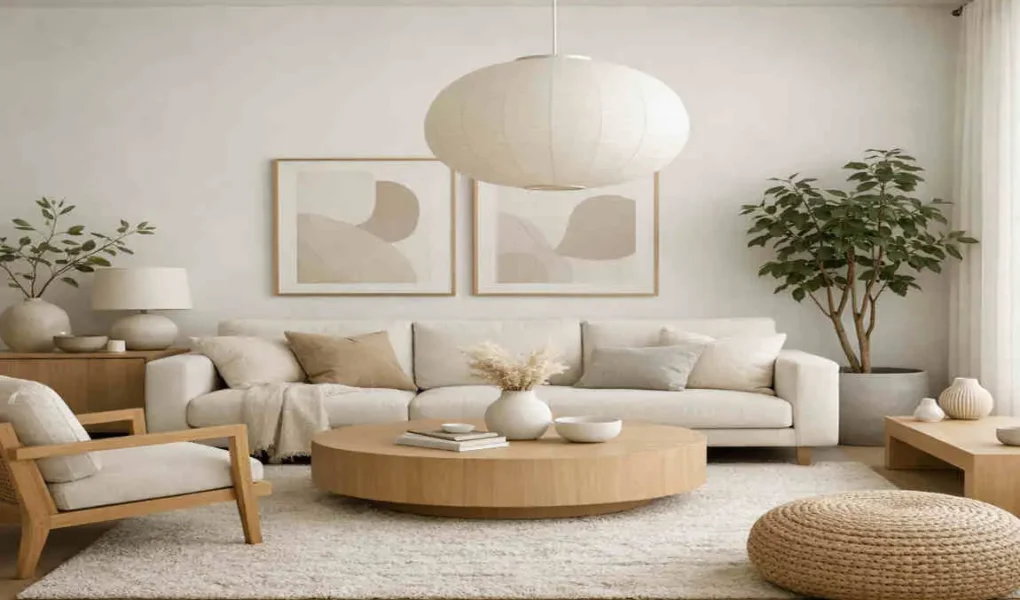
Minimalist home decor for a living room is all about creating a calm space that feels open, tidy, and easy to enjoy. Instead of filling the room with too many objects, this style focuses on choosing fewer pieces that truly matter.
That is why so many homeowners love it. It makes the living room feel more peaceful, more stylish, and much easier to live in. You get a space that looks clean without feeling cold, and comfortable without feeling crowded.
Understanding Modern Minimalist Living Room Design
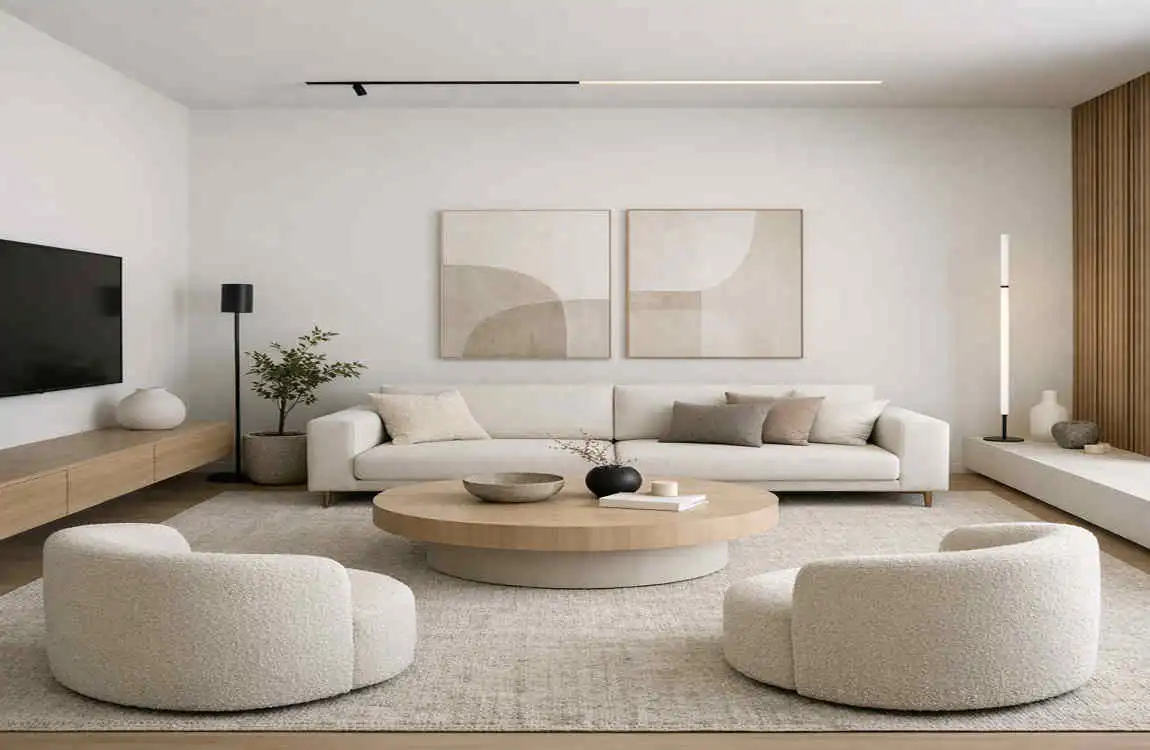
What minimalist design really means
Minimalist design is based on a simple idea: keep only what you need and love. That means fewer decorations, fewer distractions, and more focus on space, light, and function.
It does not mean the room should look empty. It means every item should have a purpose. A sofa should be comfortable. A table should be useful. A vase or artwork should add beauty without creating clutter.
The key principles of minimalist style
Minimalist living rooms usually follow a few basic rules:
- Clean lines
- Simple shapes
- Open space
- Neutral colors
- Practical furniture
- Very little visual clutter
These choices help the room feel calm and organised. They also make it easier to keep the room looking neat every day.
Modern minimalist vs traditional decor
Traditional living rooms often use more patterns, colours, and decorative items. That can feel warm and familiar, but it can also feel busy.
Modern minimalist decor takes a different path. It uses fewer pieces and lets the room breathe. The result is a more peaceful look that feels fresh and current.
Common mistakes to avoid
Many people go too far when trying minimalism for the first time. Some rooms end up feeling too cold, too plain, or too empty.
To avoid that, make sure your space still has:
- Warmth
- Comfort
- Texture
- A few personal touches
A minimalist room should feel like a home, not a waiting room.
Choosing Colours, Materials, and Textures for a Calm Space
Start with a soft colour palette.
Colour plays a huge role in how a room feels. For a peaceful living room, stick with soft, calm shades like:
- White
- Beige
- Cream
- Gray
- Soft earth tones
These colours make the room feel open and restful. They also provide a solid base for adding a few accent pieces later.
Add accent colours carefully.
You don’t have to avoid colour completely. In fact, a little colour can make the room feel more alive.
Try using muted accent shades like sage green, dusty blue, warm brown, or charcoal. These tones add personality without making the room feel messy or loud.
Use natural materials
Natural materials fit beautifully with minimalist decor because they feel honest and timeless. They also help soften the clean look of simple furniture.
Good choices include:
- Wood
- Linen
- Cotton
- Stone
- Wool
A wooden coffee table, linen curtains, or a wool throw can add warmth without breaking the simple style.
Layer textures for comfort
A room with only smooth surfaces can feel flat. Texture helps create depth and comfort.
You can mix textures in quiet ways. For example, pair a smooth sofa with a soft rug, or place a wooden side table next to a linen chair. These small differences make the room feel richer.
Keep the palette cohesive.
Repeat colours and materials throughout the room. If your curtains are warm beige, let your cushions or rug carry a similar tone. If your table is natural oak, echo that colour somewhere else in the room.
This creates flow and keeps the living room from feeling random.
Simple material and colour guide
Element Best Minimalist Choice Effect
Walls White, cream, soft grey Bright and calm
Sofa Beige, taupe, muted grey Comfortable and balanced
Table Natural wood Warm and grounded
Curtains Linen or cotton Soft and relaxed
Accessories Neutral ceramic or glass Clean and simple
Selecting Minimalist Furniture and Smart Storage Solutions
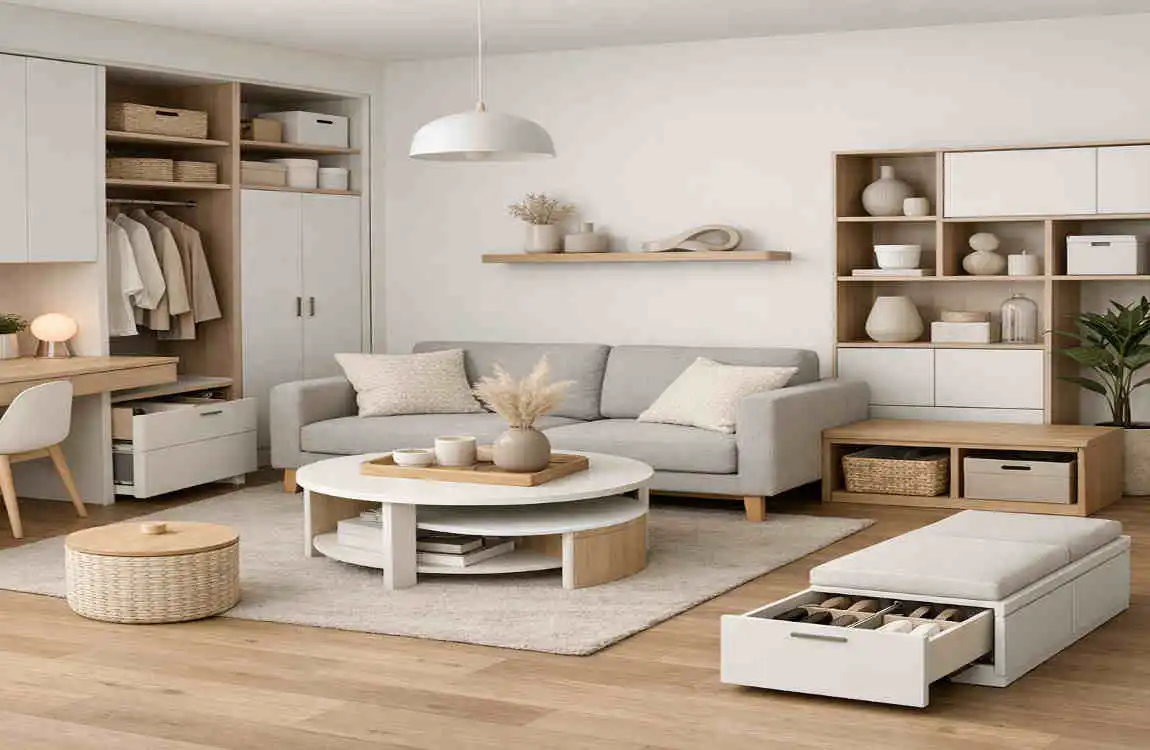
Choose furniture with clean lines.
Furniture is one of the most important parts of a minimalist living room. The best pieces are simple, useful, and not too heavy-looking.
Look for sofas, chairs, and tables with straight or gently curved lines. Avoid furniture with too many carvings, heavy patterns, or bulky shapes.
Choose pieces that fit your room size.
If your living room is small, choose furniture that does not overpower the space. A compact sofa, a slim coffee table, and one or two chairs may be enough.
If the room is larger, you can use bigger furniture, but keep the layout open. Leave space between pieces so the room still feels airy.
Smart storage makes a big difference.
A minimalist room stays peaceful only when clutter stays hidden. That is why storage matters so much.
Good storage options include:
- Hidden cabinets
- Storage ottomans
- Floating shelves
- Built-in units
- Coffee tables with storage space
These pieces help you keep blankets, remote controls, magazines, and other daily items out of sight.
Multifunctional furniture is helpful.
Furniture that does more than one job is especially useful in small homes. A storage bench, a side table that doubles as a display shelf, or an ottoman that adds extra seating can save space and keep the room flexible.
Place furniture for easy movement.
A peaceful room should feel easy to walk through. Do not push every piece against the wall if it makes the room feel awkward. Instead, create a layout that supports natural movement.
Keep enough space between the sofa, table, and chairs so the room feels open and comfortable.
Update what you already own.
You do not always need to buy new furniture. Sometimes you can repaint a table, change the upholstery, or replace heavy cushions with simpler ones.
This is a budget-friendly way to achieve a cleaner look without replacing everything.
Lighting, Decorations, and Layout Ideas for a Peaceful Living Room
Let natural light do the work.
Natural light is one of the best features in any minimalist room. It makes the space feel larger, softer, and more inviting.
Use light curtains or simple blinds so sunlight can enter without being blocked. If possible, keep windows clear of too many decorations.
Use layered lighting
A room should still feel comfortable at night. That is why layered lighting matters.
A good setup may include:
- Ceiling light for general brightness
- Floor lamp for reading or relaxing
- Table lamp for soft evening light
Warm light usually works best because it helps the room feel cosy and calm.
Keep decor simple but meaningful.
Minimalist decor should feel chosen, not crowded. A few special pieces are enough.
Good options include:
- Simple artwork
- Indoor plants
- A ceramic vase
- A mirror
- One or two framed photos
These items add personality without taking over the room.
Use statement pieces carefully.
One strong decorative piece can work beautifully in a minimalist living room. It could be a large painting, a sculptural lamp, or a beautiful chair.
The key is to let that one piece stand out. Don’t place too many bold items together, or the room will lose its calm.
Layout ideas for different spaces
Small apartments
Use compact furniture, wall shelves, and a light colour palette. Keep the floor as open as possible so the room feels bigger.
Open-plan homes
Use rugs and furniture placement to define the living room area. This creates structure without walls.
Larger living rooms
You can use more than one seating zone, but keep each area simple. Avoid filling every corner just because the room is big.
A balanced layout feels better.
A peaceful living room does not need to be perfect. It just needs to feel balanced. When furniture, lighting, and decor all work together, the room becomes much easier to enjoy.
Practical Tips, Common Mistakes
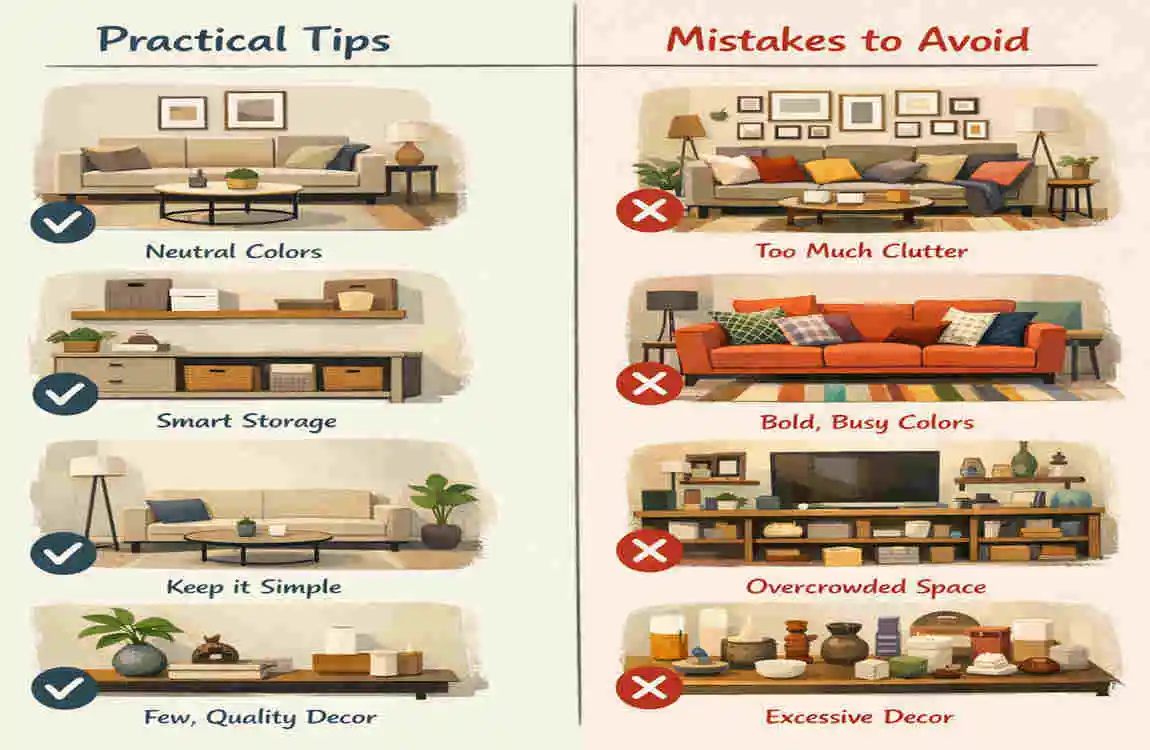
How to declutter step by step
If your living room feels crowded, start small. Decluttering is the first step toward a minimalist look.
Try this simple process:
- Remove items you do not use
- Keep only useful and meaningful decor
- Find storage for loose items
- Clear surfaces like tables and shelves
- Group similar items together
Once you remove the extra clutter, the room will already feel lighter.
Budget-friendly ways to get the look
Minimalism does not have to be expensive. In fact, it often works very well on a budget because it uses fewer items.
You can:
- Reuse your current furniture
- Paint walls in a neutral colour
- Buy a simple rug
- Add one plant
- Replace busy cushions with plain ones
Small changes can make a big difference.
Common mistakes to avoid
A few mistakes can make a minimalist room feel less inviting than it should.
Watch out for these:
- Using too much white
- Choosing uncomfortable furniture
- Removing all personality
- Adding too many small decorations
- Ignoring texture and warmth
The goal is not to make the room empty. The goal is to make it calm and comfortable.
Keeping the room neat over time
Minimalist spaces work best when you maintain them regularly. Put things back where they belong, avoid buying too many extras, and clean surfaces often.
When you stay intentional, the room stays peaceful.
Frequently Asked Questions
What is minimalist design home decor for a living room?
It is a style that uses simple furniture, clean lines, open space, and limited decoration to create a calm and organised living room.
Which colours work best for a minimalist living room?
Soft neutral colours like white, beige, cream, grey, and warm earth tones work best. You can also add small accent colours for personality.
How can I make my living room look minimalist on a budget?
Start by decluttering, reusing furniture you already have, choosing neutral colours, and adding only a few simple decor pieces.
What furniture is best for a modern minimalist living room?
Furniture with clean lines and simple shapes works best. Look for functional sofas, slim tables, practical shelves, and storage pieces.
How do I make a minimalist living room feel warm and cosy?
Use natural materials, soft textures, warm lighting, and a few personal touches like plants or artwork.
Can minimalist decor work in a small living room?
Yes. It works very well in small spaces because it reduces clutter and helps the room feel more open.
How can I decorate a minimalist living room without making it look empty?
Use a few meaningful decor pieces, add texture through rugs and cushions, and keep the layout balanced and comfortable.
| Decor Element | Ideas and Features | Benefits |
|---|---|---|
| Neutral Color Palette | White, beige, gray, and soft earthy tones | Creates a calm atmosphere |
| Minimalist Furniture | Simple sofas, sleek tables, and clean lines | Keeps the room spacious |
| Natural Lighting | Large windows and sheer curtains | Makes the room bright and airy |
| Soft Textures | Cozy cushions, wool rugs, and linen fabrics | Adds warmth and comfort |
| Natural Materials | Wood, stone, and woven accents | Brings a natural feel |
| Simple Wall Decor | Minimal artwork and neutral wall prints | Maintains a clutter-free look |
| Indoor Plants | Small potted plants and green foliage | Adds freshness and natural beauty |
| Smart Storage | Hidden cabinets and multifunctional furniture | Reduces clutter |
| Warm Lighting | Floor lamps and soft LED lights | Creates a relaxing mood |