If you have ever asked how high is a house in metres, you are not alone. House height may sound like a small detail, but it matters a lot in real life. It can affect planning permission, roof work, home extensions, solar panel fitting, and even the way a property is valued.
Knowing a house’s height also helps when you are buying a home, designing a new build, or planning repairs. A house may look simple from the outside, but its overall height depends on the number of storeys, ceiling heights, roof style, and local building codes.
How High Is a House in Metres?
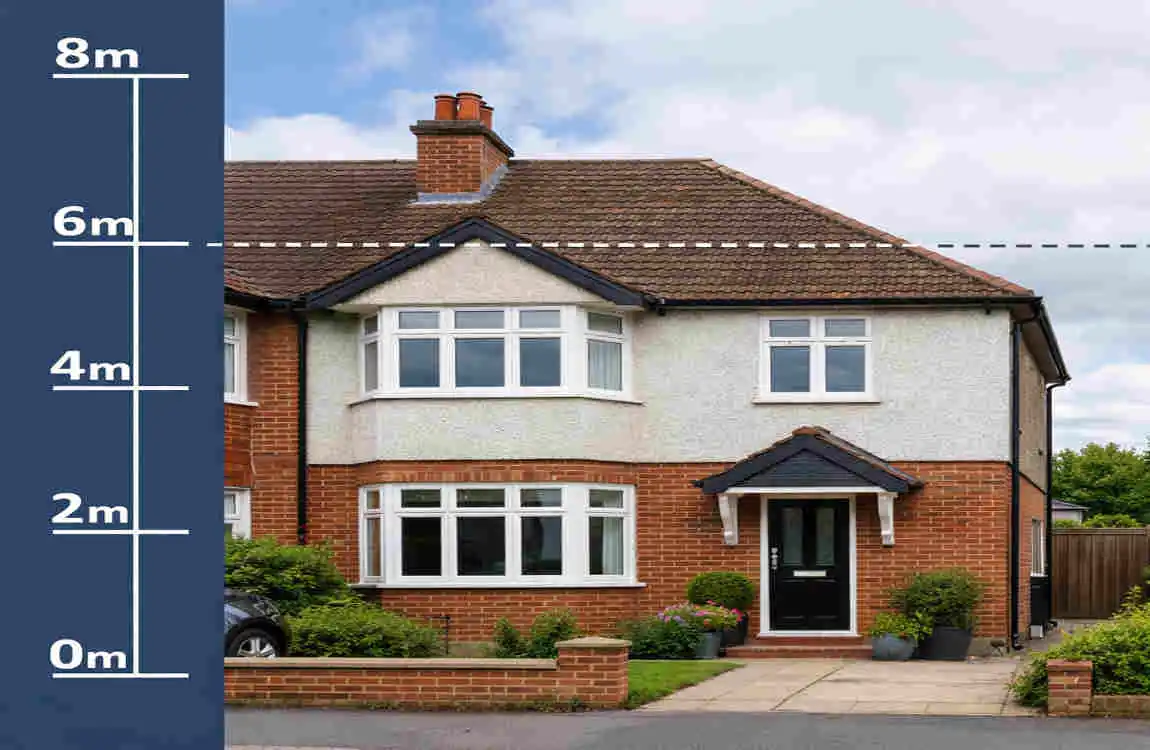
The short answer is that most houses fall between 4 and 12 metres high. The exact number depends on how many floors the home has and what kind of roof it has.
A house is measured from the ground level to the highest point of the roof. That means the roof is part of the total height, not just the rooms inside.
Average Height of a One-Storey House
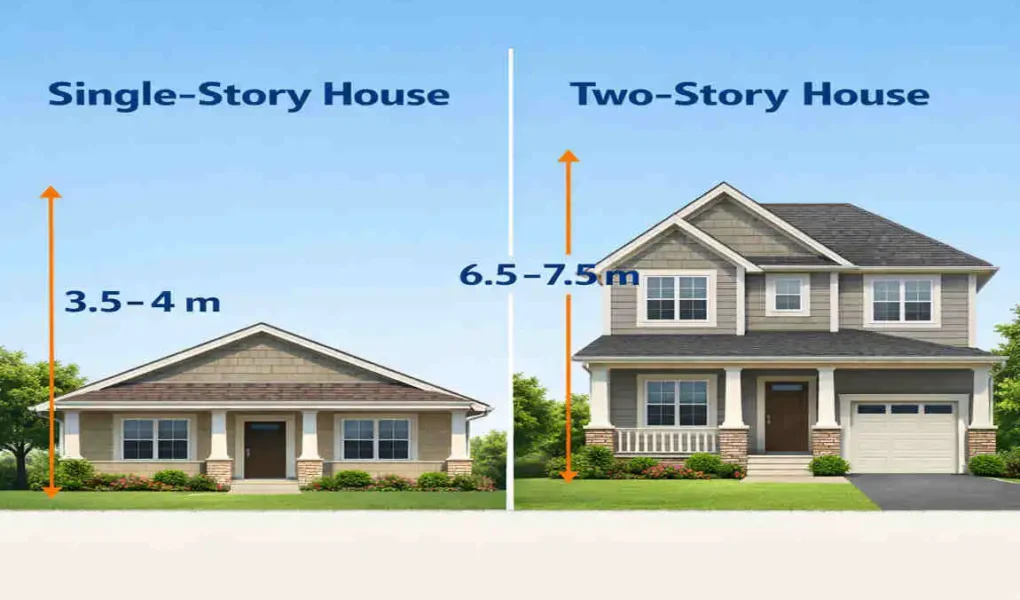
A one-storey house is usually around 4 to 6 metres high.
This range includes the ceiling height, the floor structure, and the roof. A simple bungalow with a low-pitch roof will often sit near the lower end. A home with a steep roof or raised foundation may be taller.
Inside, the ceiling is often around 2.4 to 2.7 metres, while the rest of the height comes from the roof structure and roof shape.
Average Height of a Two-Storey House
A two-storey house is usually around 7 to 9 metres high.
This is the most common type of family home in many places. The height comes from two floors stacked on top of each other, plus the roof. A two-storey home with a steep roof can be taller than expected, while a house with a flat roof may sit toward the lower end.
Average Height of a Three-Storey House
A three-storey house is often around 10 to 12 metres high.
These homes are naturally taller because of the extra floor. Townhouses, larger city homes, and some modern family houses may fall into this range. Roof style still matters so that the final height can shift a little.
Standard Ceiling Heights in Residential Homes
Ceiling height plays a big role in how tall a house becomes. Even a small change in ceiling height can make the whole building feel taller.
Ground Floor Ceiling Height
In many modern homes, the ground floor ceiling is about 2.4 to 2.7 metres high.
Older homes may have slightly lower ceilings, especially in smaller houses built many years ago. On the other hand, newer homes often use taller ceilings to create a more open feel.
A higher ceiling adds comfort and space, but it also increases the overall height of the house. That is why modern designs can appear taller even when the number of storeys stays the same.
Upper Floor Ceiling Height
Upper-floor ceilings are often similar to ground-floor ceilings. Still, they may sometimes be slightly lower to keep the building within height limits.
In some areas, building rules control the maximum height of homes. Because of this, builders may adjust ceiling size, roof pitch, or floor thickness to keep the house within permitted limits.
Vaulted and Cathedral Ceilings
Vaulted and cathedral ceilings can make a house look much taller, both inside and out.
These ceilings rise above the normal flat line, often following the roof’s slope. They look impressive and create a sense of spaciousness, but they can also increase the overall height quite a bit.
If a home has one of these ceiling types, the answer to how high a house is in metres may be higher than the average.
What Factors Affect the Height of a House?
Many things shape the final height of a house. Two homes with the same number of floors can still be very different in height.
Number of Storeys
This is the biggest factor.
More storeys mean more vertical space. A one-storey house is usually much shorter than a two-storey home, and a three-storey house is taller again. Each added floor increases the total height by several metres.
Roof Design
The roof can significantly affect the total height.
A simple flat roof adds very little height. A steep gable roof adds more. A mansard roof or tall attic space can make a house seem much taller than its floor count suggests.
Roof Pitch
Roof pitch means how steep the roof is.
A steep roof rises quickly, adding more height. A low-pitch roof stays flatter and keeps the house lower. This is one of the main reasons two homes with the same layout may look very different from the street.
Foundation Height
Some homes sit on higher foundations or raised platforms.
This is common in flood-prone areas, on sloped land, or in places where builders want extra crawl space below the home. A raised foundation adds height before the walls even begin.
Ceiling Height
Higher ceilings mean taller rooms and a taller building overall.
A home with 3-metre ceilings will be taller than one with 2.4-metre ceilings, even if both have the same number of floors.
Attic or Loft Space
A usable attic or loft can also increase height.
If the roof is designed to hold storage or living space, it is often shaped differently. That extra space often needs more vertical room, which raises the total house height.
Local Building Regulations
Rules in your area may limit how tall a house can be.
These rules govern lighting, privacy, street appearance, and safety. Builders often design homes to comply with local limits, which can affect ceiling height, roof shape, and overall building height.
Architectural Style
Different home styles have different height patterns.
For example, a bungalow usually stays low and wide, while a townhouse is often narrow and tall. A luxury villa may have grand ceilings, dramatic rooflines, and extra height for design purposes.
Average House Height by House Type
Here is a simple comparison of common home types and their average heights.
House Type Average Height (Metres)
Bungalow 4–6 m
One-storey house 4–6 m
Two-storey house 7–9 m
Three-storey house 10–12 m
Townhouse 8–11 m
Luxury villa 8–15 m
This table shows why the height of a house, in metres, depends so much on design. A bungalow is usually lower, while a luxury villa may be far taller because of its style and roof shape.
How Roof Design Changes the Overall Height
Roof design is one of the easiest ways to change house height without changing the number of floors.
Flat Roofs
Flat roofs keep the house lower.
They are common in modern homes and extensions. Because they have little slope, they do not add much height above the wall line. This makes them useful in areas with height limits.
Gable Roofs
Gable roofs are among the most common roof types.
They form a triangular shape and usually add more height than flat roofs. The steeper the gable, the taller the house appears from the outside.
Hip Roofs
Hip roofs slope on all sides.
They often sit a little lower than steep gable roofs, but they still add a noticeable amount of height. They also give homes a more compact and balanced look.
Mansard Roofs
Mansard roofs can make a house look very tall.
They are often used when people want extra space in the roof area. Because of their shape, they can add significantly to the overall height and may even create more usable upper space.
Dormers
Dormers are small roof structures that project outward.
They do not always add much height, but they can change the roofline and create the impression of a taller house. They are also useful for adding light and space to loft rooms.
Steep Roofs vs Low-Pitch Roofs
A steep roof increases height more than a low-pitch roof.
If you compare two homes with the same walls, the one with the steeper roof will usually be taller. This is one of the simplest ways to understand why house height varies so much.
House Height Standards in Different Countries
House heights can vary slightly depending on country, climate, and building rules.
United Kingdom
In the United Kingdom, many homes are around 4 to 9 metres tall, depending on whether they are bungalows, semi-detached houses, or two-storey homes.
Older houses may have different proportions from newer ones. In many British homes, ceiling height is modest, and roof style strongly affects overall height.
United States
In the United States, average home height is often in a similar range, though larger suburban homes can be taller.
Many American homes have two storeys and a pitched roof, so a height of 7 to 10 metres is common. Some homes are even taller if they include basements, high ceilings, or complex roof designs.
Australia
In Australia, many homes are designed with practical roof shapes to suit the climate.
Single-storey homes are very common, and many sit around 4 to 6 metres high. Two-storey homes usually range from 7 to 9 metres in height, depending on the roof type and ceiling height.
Canada
In Canada, homes often follow the same broad patterns as in the United States.
Cold weather and snow can influence roof design, so pitched roofs are common. That means many homes sit in the 4 to 9-metre range, with taller homes exceeding that.
Why Knowing House Height Is Important
Understanding house height is useful in many situations.
- Planning permission: Height affects whether a new build or extension is allowed.
- Roof replacement: Builders need height details to work safely.
- Solar panels: The roof angle and height affect placement.
- Scaffolding: Contractors need exact measurements before work begins.
- Painting and repairs: Height helps estimate labour and equipment.
- Insurance estimates: Property details can influence cost and risk.
- Property valuation: Height and design can affect overall appeal.
Knowing the size of your home also helps you communicate more clearly with builders, surveyors, and installers.
How to Measure the Height of a House
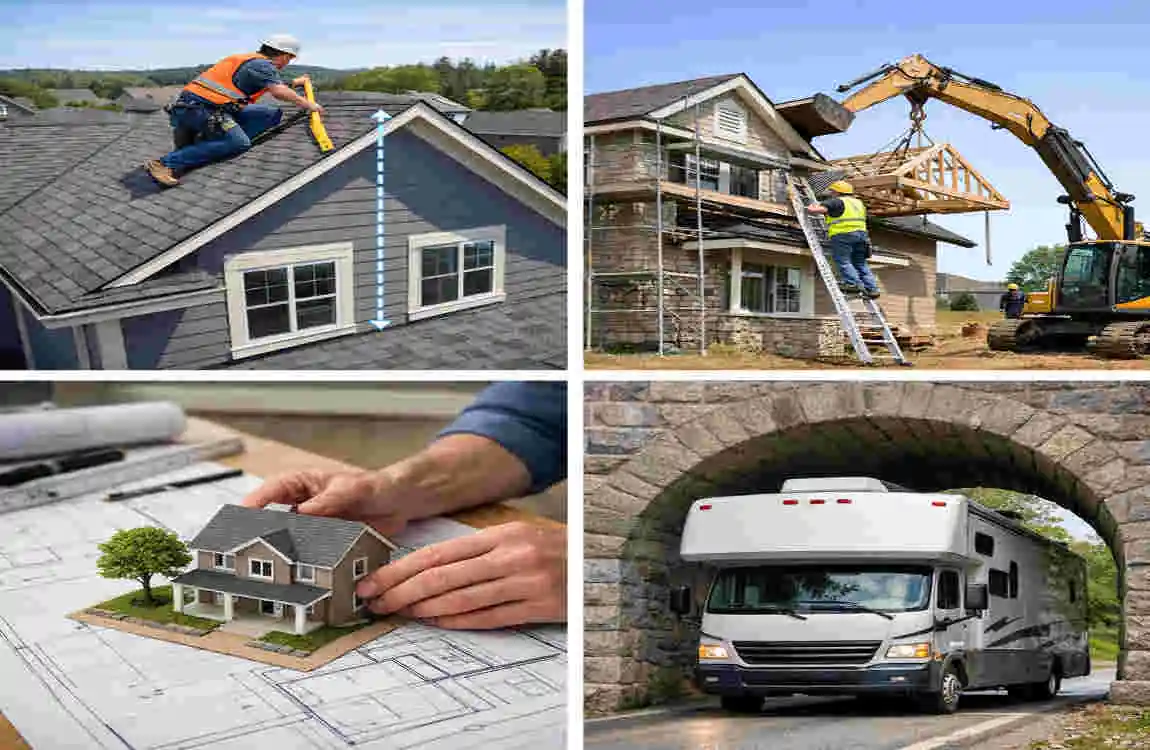
There are several ways to measure a house, depending on how accurate you need to be.
Use a Tape Measure
This works only when the area is easy to reach.
You can measure from ground level to a known point, then add the roof height if needed. This method is simple, but it may not be practical for taller houses.
Use a Laser Distance Meter
A laser meter is faster and usually more accurate.
You point it at the top of the house and read the distance. Many modern tools make this process simple, especially for two-storey homes.
Check Building Plans
If you have the original plans, they may already show the height.
This is often the easiest method for new homes or recently built properties. Plans usually list wall height, roof height, and total structure height.
Hire a Professional Surveyor
This is the best option for exact measurements.
A surveyor can give you a reliable figure, which is helpful for legal, planning, or construction work. If the number matters for permits or design, professional help is usually worth it.
Use Online Mapping Tools
Some mapping tools can estimate building height.
These tools are not always perfect, but they can give a rough idea. They are useful when you need a quick estimate before doing a full check.
Simple Step-by-Step Method
- Start at ground level on the side of the house.
- Measure to the wall top if possible.
- Add the roof height to reach the highest point.
- Check the number again from another side if the land is sloped.
- Use a professional if the result must be exact.
Common Questions About House Height
Does roof pitch increase house height?
Yes. A steeper roof usually makes the house taller.
How tall is a standard roof?
A standard roof can add roughly 1 to 4 metres, depending on its design.
Can house height be increased?
Yes, but it usually needs planning permission, design work, and professional construction.
Are older homes taller?
Not always. Some older homes have lower ceilings, while others have large roof spaces and higher rooflines.
What is the minimum ceiling height?
This depends on local rules, but many homes use ceilings around 2.4 metres or higher.
FAQ
How high is a house in metres?
Most houses range from 4 to 9 metres tall depending on whether they have one or two storeys and the roof design.
How tall is a standard two-storey house?
A typical two-storey house is 7 to 9 metres high.
What is the average ceiling height in a house?
Most modern homes have ceilings between 2.4 and 2.7 metres high.
Does the roof count toward house height?
Yes. The roof is included when measuring the total height of a house from ground level to the highest point.
How can I measure my house height?
You can use a laser distance meter, building plans, a tape measure where practical, or hire a professional surveyor for the most accurate results.
| House Type | Typical Height (Metres) | Approximate Height (Feet) | Notes |
|---|---|---|---|
| Single-storey house | 3–5 m | 10–16 ft | Includes roof height. |
| Two-storey house | 6–8 m | 20–26 ft | Most common family home height. |
| Three-storey house | 9–11 m | 30–36 ft | Often found in urban areas. |
| Bungalow | 3–4.5 m | 10–15 ft | Single-level home with a low roof. |
| Townhouse | 7–10 m | 23–33 ft | Usually two or three storeys. |
| Detached house | 6–9 m | 20–30 ft | Varies by roof style and design. |
| Semi-detached house | 6–8 m | 20–26 ft | Similar height to detached homes. |
| House with attic | 7–9.5 m | 23–31 ft | Extra height due to the attic space. |