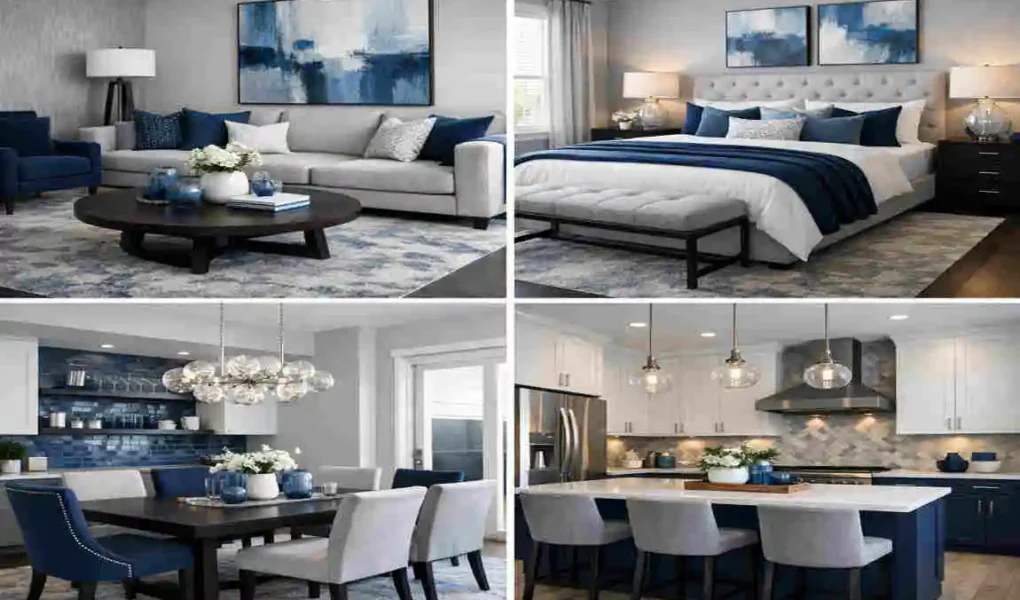
That mix makes the palette useful in almost every part of the home. You can use it in living rooms, bedrooms, kitchens, bathrooms, and entryways. It also works in both large and small rooms, which is one reason so many homeowners like it.
Another big reason this combination works so well is flexibility. Soft blue and light gray can feel airy and peaceful. Dark navy and charcoal can feel bold and elegant. In other words, you can make the same palette feel cozy, dramatic, fresh, or refined depending on the shades you choose.
Choosing the Right Blue and Gray Color Combination
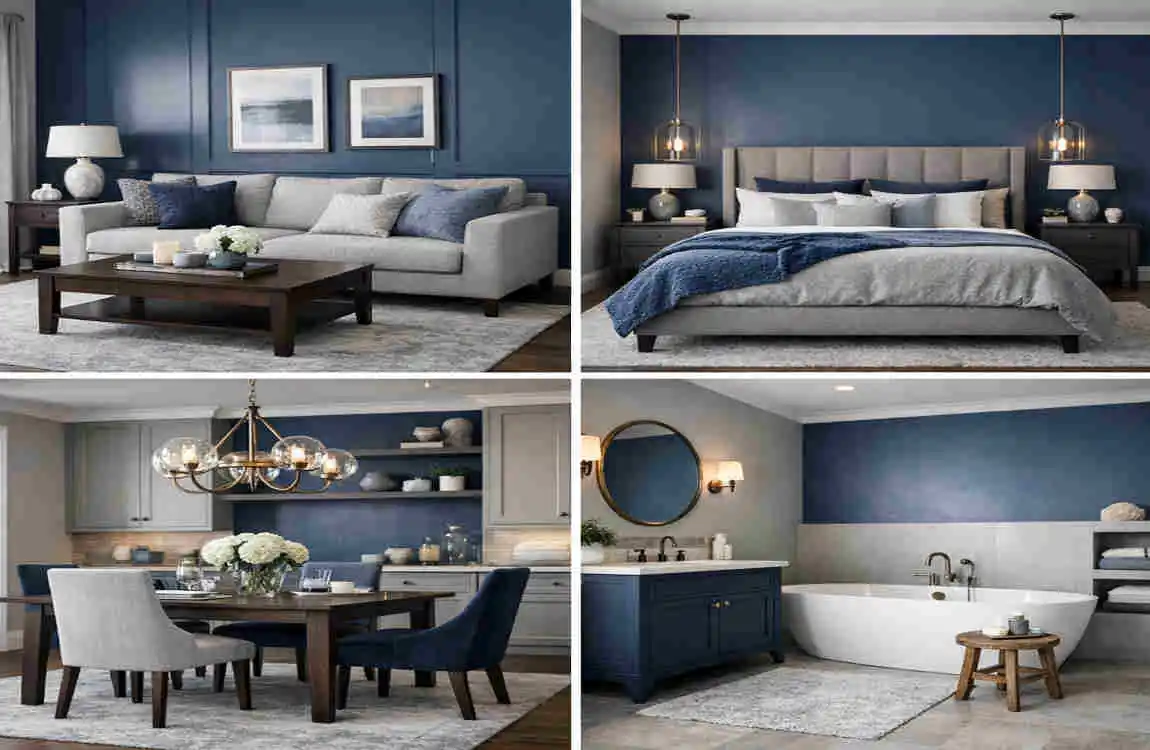
Light Blue and Soft Gray
Light blue and soft gray create a gentle, quiet look. This combination feels open, fresh, and relaxing.
It works especially well in bedrooms, reading corners, and smaller rooms where you want the space to feel brighter. Soft tones help the room feel calm without looking plain.
If you like peaceful interiors, this pairing is a very safe and beautiful choice.
Navy Blue and Charcoal Gray
Navy blue and charcoal gray create a stronger, more dramatic mood. This combination feels deep, modern, and elegant.
Because both colors are dark, it is usually best to use one as the main shade and the other as an accent. For example, you might use charcoal walls with navy pillows, or a navy sofa with gray rugs.
This helps the room feel rich without becoming too heavy.
Teal Blue and Warm Gray
Teal brings energy, while warm gray keeps the room steady. Together, they create a space that feels lively but still comfortable.
This combination is great if you want more personality in your home without going too bright. Teal works nicely in art, chairs, curtains, and accent decor.
The warm gray helps the teal stand out while softening the overall look.
Blue-Gray: A Perfect Middle Ground
Blue-gray sits right between the two colors. It is calm like gray, but it still has a hint of blue, so it feels more interesting.
This shade is useful when you want a soft color that still feels alive. It works well on walls, cabinets, furniture, and accessories.
Lighting can change the way blue-gray looks. In daylight, it may seem cooler. Under warm lamps, it may look softer and more neutral.
Blue and Gray Living Room Decoration Ideas
Use Gray as the Main Neutral
A gray base is often the easiest way to build a blue-and-gray living room. Gray walls, rugs, or sofas create a calm foundation.
Then you can bring in blue through cushions, artwork, curtains, and accent chairs. This keeps the room balanced and easy to update later.
If you like changing your style over time, this approach gives you a lot of freedom.
Create a Blue Accent Wall
A blue accent wall can add focus without taking over the room. Navy, slate, or muted blue can work especially well.
Use this idea on the wall behind a sofa, fireplace, or media console. That way, the color has a clear purpose.
An accent wall is a smart choice if you want depth without painting the whole room dark.
Add Texture for a Cozy Look
Texture is important in any blue-and-gray room. Without it, the space may feel too flat or too cold.
Try mixing velvet, linen, wool, wood, and woven materials. These finishes add softness and depth.
A velvet chair, a woven basket, or a chunky throw can make the whole room feel more inviting.
Balance Dark and Light Elements
Dark colors can look beautiful, but they need balance. If your room has navy walls or dark gray furniture, add lighter pieces to keep it open.
You can do this with white lamps, pale curtains, glass tables, or light rugs. Natural light also helps a lot.
The goal is to keep the room rich, not heavy.
Blue and Gray Bedroom Ideas for a Calm Retreat
Choose Soft Shades for Relaxation
Bedrooms should feel restful. That is why light blue, dusty blue, and pale gray work so well here.
These shades help the room feel peaceful and easy to relax in. They also pair nicely with soft bedding and simple wall colors.
If you want a bedroom that feels quiet and comforting, start with these tones.
Add Navy Blue Accents
A little navy can make a bedroom feel more polished. You do not need a lot.
Try navy pillows, a blanket, curtains, or an upholstered headboard. These touches add depth without making the room too dark.
This is a good way to bring in sophistication while keeping the space restful.
Layer Bedding and Fabrics
A bedroom feels better when the bedding has depth. Use varied textures and shades instead of a single flat, matching set.
Combine soft cotton sheets, a textured throw, smooth pillows, and a cozy rug. That mix makes the room feel thoughtful and lived in.
It also helps the palette feel richer and more layered.
Blue and Gray for Modern Guest Rooms
Blue and gray are perfect for guest rooms because they feel calm and neutral. Most guests find this palette comfortable and easy to enjoy.
Use simple bedding, clean-lined furniture, and a few decorative pieces such as framed art or a soft lamp. This creates a welcoming space without making it too personal.
Blue and Gray Kitchen and Dining Room Decoration
Blue Kitchen Cabinets With Gray Elements
Blue cabinets can make a kitchen feel stylish and memorable. Navy, dusty blue, and muted blue all work well.
Pair them with gray countertops, backsplashes, walls, or flooring. This keeps the kitchen grounded and avoids a look that feels too bold.
This combination works especially well in modern, farmhouse, and transitional kitchens.
Gray Cabinets With Blue Accents
If you want a softer kitchen, gray cabinets are a good base. Then you can add blue through small details.
Blue bar stools, pendant lights, rugs, or appliances can bring in color without changing the whole room. This makes the kitchen feel fresh but still calm.
It is also easier to update later if you want a new look.
Use Metallic and Natural Finishes
Metallic finishes help blue and gray feel complete. Brass, chrome, black, and stainless steel all work well in this palette.
Wood is also helpful because it brings warmth into the room. A wooden table, stools, cutting boards, or open shelves can help keep the kitchen from feeling too cool.
Dining Room Color Ideas
In the dining room, blue and gray can feel very elegant. Blue chairs, gray walls, patterned rugs, and simple centerpieces work beautifully together.
Keep the balance in mind. If the walls are dark, use lighter furniture or a bright table. If the room is already light, you can add deeper blue for contrast.
Blue and Gray Bathroom and Small-Space Ideas
Create a Spa-Like Bathroom
A bathroom feels more relaxing when the colors are soft and balanced. Light blue walls or tiles with gray flooring create a clean, spa-like mood.
Simple accessories work best here. Use natural textures, soft towels, and neat storage. That keeps the room fresh and uncluttered.
Blue and Gray Tile Combinations
Tile is a great place to use this color palette. Subway tiles, patterned tiles, and stone-inspired finishes all work well.
You can use blue tiles as a feature and keep gray as the main background. Or you can reverse that and use gray tile with blue details.
Either way, tile adds visual interest while still feeling practical.
Make Small Rooms Feel Larger
Light colors usually work better in small rooms. Pale blue, soft gray, mirrors, and reflective surfaces help the space feel more open.
Good lighting matters too. A well-lit room always feels bigger than a dark one.
If you want to use dark blue, keep it as an accent rather than the main color. That helps avoid a cramped feeling.
Add Small Blue and Gray Accessories
You do not always need a full remodel. Small accessories can change the mood quickly.
Try blue and gray towels, bath mats, storage baskets, shower curtains, or artwork. These items are easy to swap out and give the bathroom a fresh look without much cost.
How to Style Blue and Gray Decor Throughout the Home
Select a Consistent Color Palette
A good home design feels connected from room to room. To do that, choose two or three main shades and use them throughout the house.
This does not mean every room must look the same. It just means the colors should feel like they belong together.
For example, you might use light gray, dusty blue, and white in shared spaces, then bring in darker blue in private rooms.
Add Warmth With Wood
Blue and gray are cool colors, so wood is very helpful. It adds warmth and keeps the home from feeling too chilly.
You can use wood flooring, chairs, shelves, tables, or decorative objects. Even small wooden details make a difference.
This is one of the easiest ways to soften a blue-and-gray home.
Use White and Cream as Supporting Colors
White is useful because it brightens the palette. It gives the eyes a place to rest and helps blue and gray feel cleaner.
Cream or beige can be a better choice than bright white if you want a softer, warmer feel. That is especially helpful in rooms with a lot of gray or navy.
Incorporate Patterns Carefully
Patterns can bring life to a blue-and-gray home. But they work best when used with care.
Geometric prints, stripes, florals, and subtle patterns can all fit this color scheme. Use them in cushions, rugs, curtains, or artwork.
The trick is not to use too many different prints at once. One or two is usually enough.
Choose Lighting That Complements the Palette
Lighting can completely change how your colors look. Blue and gray often feel cooler in natural daylight and warmer under lamps.
That is why the choice of lighting matters so much. Use ceiling lights, floor lamps, and table lamps to create layers.
Warm light often makes blue and gray spaces feel more comfortable and welcoming.
Common Blue and Gray Decorating Mistakes to Avoid
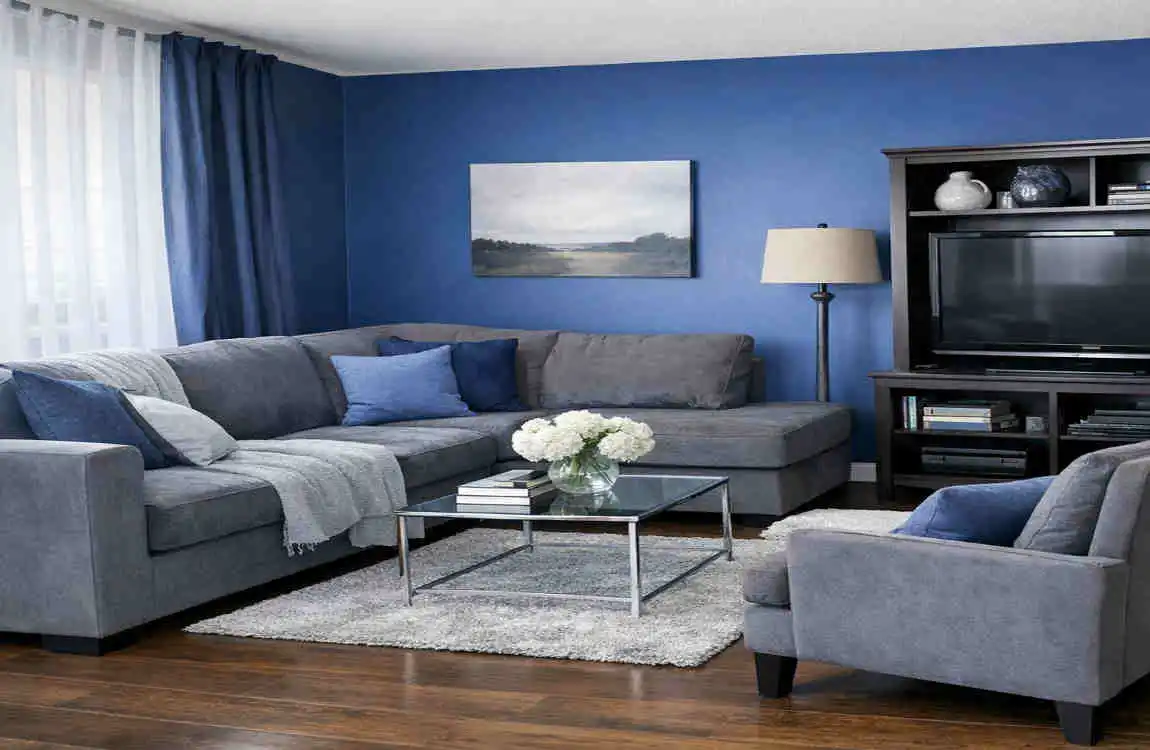
Using Too Many Cool Colors
If a room has only cool shades, it can start to feel cold or flat. Blue and gray are beautiful, but they need balance.
Add wood, cream, soft fabrics, or metallic accents to bring warmth back into the room.
Making Every Element the Same Shade
A room where everything matches too closely can look dull. You want variation.
Use different shades of blue and gray to give the space depth. Light, medium, and dark shades all help create dimension.
Overusing Dark Blue
Dark blue is beautiful, but too much of it can make a room feel smaller. Use it with care.
It often works best as an accent on a wall, chair, curtain, or cabinet detail rather than the main color everywhere.
Ignoring Natural and Artificial Lighting
Paint and fabric can look very different depending on the light. A color that looks soft in one room may appear much darker in another.
Always test samples before committing. Look at them at different times of day so you understand how they really behave.
Forgetting the Existing Decor
Before choosing new colors, look at what is already in the room. Flooring, countertops, furniture, and trim all affect the final result.
A successful blue-and-gray room works with what you have, not against it.
FAQ About Blue and Gray Home Decoration
Is blue and gray a good combination for home decoration?
Yes. Blue adds personality, while gray gives the room a balanced and flexible base.
What color goes well with blue and gray?
White, cream, beige, natural wood, black, brass, and soft green all work well with this palette.
What shade of blue looks best with gray?
Navy, dusty blue, slate blue, teal, and muted blue are all strong options. The best one depends on your room and lighting.
Is blue and gray home decoration suitable for small rooms?
Yes. Lighter shades can make small rooms feel brighter and more open.
How can I make a blue-and-gray room feel warmer?
Add wood, cream accents, woven materials, rugs, and warm lighting.
Can blue and gray be used in every room?
Yes. They work in living rooms, bedrooms, kitchens, bathrooms, dining rooms, offices, and entryways.
What accent color works best with blue and gray?
White and natural wood are easy choices. Brass, beige, cream, muted green, and soft gold also work well.
| Element | Blue & Gray Home Decoration Ideas |
|---|---|
| Color Combination | Pair soft gray with navy, sky blue, or muted blue for a balanced modern look. |
| Living Room | Use a gray sofa with blue cushions, rugs, curtains, or accent chairs. |
| Bedroom | Try blue bedding with light-gray walls for a calm and stylish atmosphere. |
| Kitchen | Combine gray cabinets with blue backsplash tiles or decorative accessories. |
| Walls | Choose light gray as the main color and add blue through an accent wall or artwork. |
| Furniture | Mix gray furniture with blue accent pieces to create visual contrast. |
| Decor Accessories | Add blue vases, lamps, artwork, pillows, and throws against gray backgrounds. |
| Best Style | The combination works especially well with modern, minimalist, coastal, and contemporary interiors. |
| Overall Effect | Blue adds personality and freshness, while gray provides a sophisticated neutral foundation. |