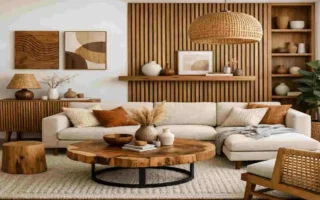
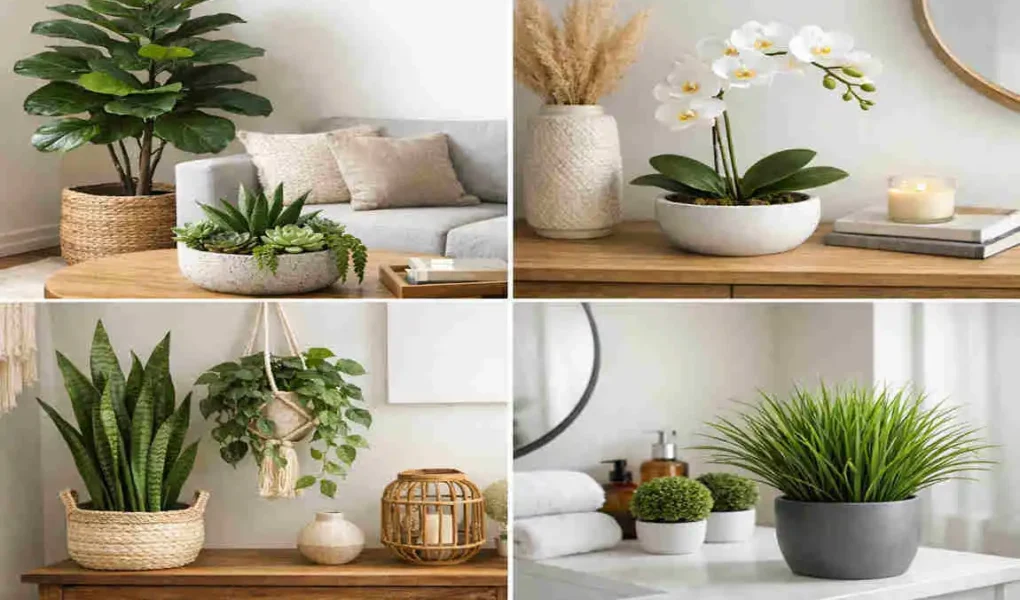
That makes them especially useful if you live in an apartment, work long hours, or want a home that feels more finished with less effort. They also work well in rooms where real plants may struggle, such as dark corners, bathrooms, hallways, and bedrooms with limited light.
The best part is that modern faux plants look far better than they used to. Many now have natural leaf shapes, realistic colours, and better textures. When you choose them well and style them thoughtfully, they can look polished, warm, and very convincing.
Choosing the Right Artificial Plants for Home Decor
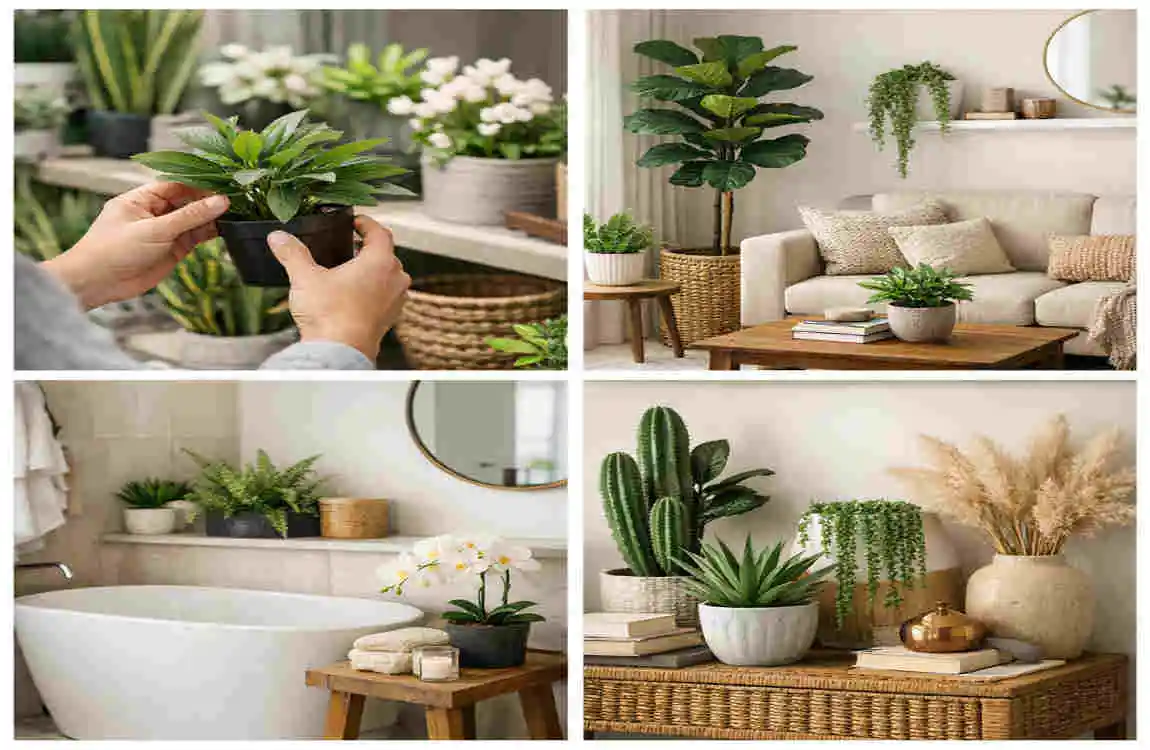
Picking the right faux greenery is not just about grabbing the first plant you see. The best choice depends on your room, your style, and how natural you want the final look to feel.
Consider Your Home’s Interior Style
Your artificial plants should match the mood of your home. A plant that looks great in one room may feel out of place in another.
Modern and minimalist spaces
If your home has a clean, modern feel, look for simple plants with neat lines and fewer decorative details. Think of tall grasses, olive trees, or sleek leafy stems in plain pots. These work well because they do not overpower the room.
Farmhouse and rustic interiors
For farmhouse or rustic homes, choose plants that feel soft, warm, and a little earthy. Ferns, eucalyptus, and potted herbs often fit this style nicely. Pair them with woven baskets, wood containers, or ceramic pots for a cosy finish.
Traditional and luxury decor
Traditional rooms often suit fuller plants with rich shapes and elegant planters. In more luxurious spaces, taller faux plants or well-shaped arrangements can add a sense of balance and style.
Bohemian-inspired rooms
Boho spaces usually welcome layered textures and relaxed styling. You can use trailing plants, mixed greenery, or plants in textured pots to create a more lived-in and artistic look.
Choose the Right Size and Shape
Size matters more than many people think. A plant that is too small can disappear. A plant that is too large can make the room feel crowded.
Small plants for shelves and tables
Small artificial plants work best on coffee tables, side tables, bathroom counters, bookshelves, and desks. They add a soft touch of green without taking over the space.
Medium plants for corners
Medium-sized plants are great for filling empty spots beside chairs, dressers, or consoles. They add life to the room without becoming the main focus.
Large artificial trees for open spaces
If you have a larger room or a tall empty corner, an artificial tree can make the space feel more complete. Fiddle leaf figs, olive trees, or tall palms are common choices because they add height and structure.
Look for Realistic Details
The difference between fake-looking and realistic faux plants usually comes down to detail.
Natural-looking leaves
Real plants are never perfectly flat or identical. Good artificial plants often have slight differences in leaf shape, size, and direction. That small variation makes the plant look more believable.
Realistic colors and textures
Look for greens that feel natural, not neon or overly bright. Slight colour variation across the leaves also helps. Textures matter too. Soft matte leaves often look more real than shiny plastic ones.
Quality stems and containers.
A plant can look nice, but if the stems are stiff or the pot looks cheap, the whole display can lose its charm. Quality containers help the arrangement feel finished and intentional.
Avoid overly shiny plastic finishes.
This is one of the easiest signs of an artificial plant. If a plant gets too much light, it may look fake right away. A better choice is usually a matte or lightly textured finish.
Simple buying checklist
- Choose a style that matches your room
- Pick the right size for the space
- Look for natural leaf variation
- Avoid shiny plastic finishes
- Use a planter that fits the decor
Best Places to Use Artificial Plants at Home
One of the biggest strengths of artificial plants for home decor is that they can go almost anywhere. You are not limited by sunlight, humidity, or watering needs.
Living Room
The living room is one of the best places for faux greenery because it is usually the home’s main gathering space.
Place plants beside sofas, windows, or entertainment units.
A tall plant next to a sofa can soften the room’s edges. A small plant on a side table can add a fresh detail. A plant near an entertainment unit can help balance the look of electronics and furniture.
Use large floor plants to fill empty corners.
Corners often feel bare. A large artificial tree or floor plant can help the room feel more complete and welcoming.
Bedroom
Bedrooms should feel calm and restful. Artificial plants can support that feeling without adding extra work.
Add small plants to nightstands, dressers, or shelves.
Small arrangements work well in bedrooms because they add a touch of life without making the room feel busy. A tiny fern, a mini succulent, or a small potted plant can do the trick.
Choose calming, simple designs.
In a bedroom, it is usually better to avoid very bold or crowded arrangements. Softer shapes and simple containers create a more peaceful effect.
Kitchen and Dining Area
These spaces can also benefit from greenery, especially if you want them to feel fresh and inviting.
Use small greenery on countertops or dining tables.
A small artificial herb plant or compact greenery arrangement can look lovely on a kitchen counter or dining table. It adds colour without getting in the way.
Consider artificial herbs for decorative displays.
Artificial herbs such as rosemary, basil, or lavender can look charming in jars, baskets, or ceramic pots. They fit the kitchen mood well and feel casual and homey.
Entryway and Hallways
Your entryway is the first thing people see. Faux plants can make it feel warmer right away.
Create a welcoming first impression.
A tall plant near the door or a simple arrangement on a console table can help your home feel more inviting as soon as someone walks in.
Use plants to soften hallways.
Hallways can feel plain or narrow. A small plant on a shelf or a slim floor plant in a corner can make them feel more finished and less empty.
Best room-by-room placement table
RoomBest Plant TypeBest PlacementEffect
Living room Large floor plant, medium foliage Corners, beside sofa, near TV unit Adds balance and warmth.
Bedroom Small plant, soft greenery Nightstand, dresser, shelf Creates a calm look.
Kitchen Herb-style or small plant Countertop, dining table Adds freshness
Entryway Tall plant, decorative arrangement Console table, doorway corner Makes a strong first impression
Hallway Slim plant or small arrangement Shelf or narrow corner Softens space
How to Style Artificial Plants for a Natural Look
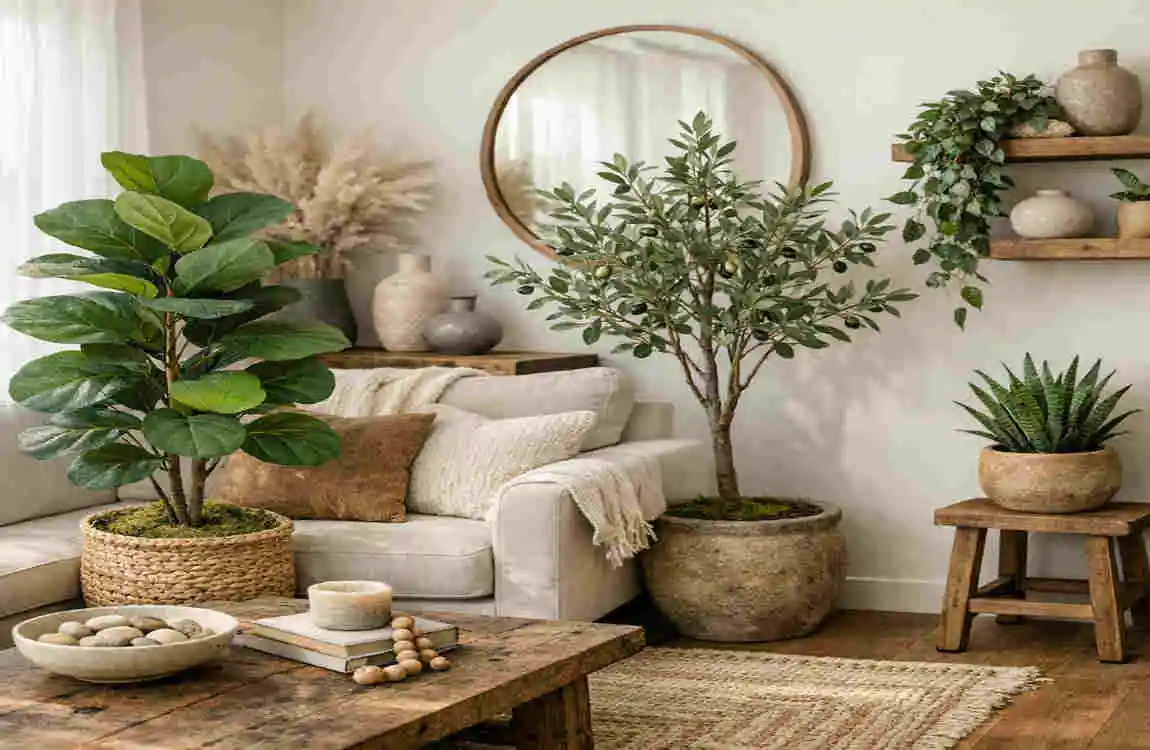
Styling is what makes faux plants feel like part of the room instead of something placed there by accident. A little thought goes a long way.
Use Attractive Pots and Planters
The planter matters just as much as the plant itself. A good container can make a simple plant look stylish and intentional.
Match planters with the room’s colour scheme
If your room has soft neutral tones, choose pots in beige, white, grey, or wood finishes. If your room is more colourful, you can use a planter that adds contrast without clashing.
Try different planter materials.
Ceramic, woven, metal, and wooden containers all create different moods.
- Ceramic feels clean and modern
- Woven baskets feel soft and casual
- Metal can add a sharper, industrial look
- Wood brings warmth and natural texture
Mix Different Heights
A display looks more natural when everything is not the same height.
Combine tall, medium, and small plants.
You can place a tall plant in one corner, a medium plant on a table, and a small plant on a shelf. This creates visual rhythm and keeps the room from feeling flat.
Combine Plants With Other Decor
Plants look better when they are part of a larger design story.
Pair greenery with books, lamps, artwork, baskets, and decorative accessories
For example, a small plant next to a stack of books feels relaxed and lived in. A plant beside a lamp or framed print can help balance the whole setup.
Avoid Overcrowding
More is not always better. Too many artificial plants can make a room feel busy or cluttered.
Use them strategically
Choose a few strong spots instead of filling every surface. This helps each plant stand out and keeps the room looking clean.
Simple styling ideas
- Use one large plant in a corner
- Add one small plant to a shelf
- Place one medium arrangement on a console or table
- Repeat materials or colours for harmony
- Leave some space so the room can breathe
Benefits of Artificial Plants for Home Decor
There is a reason so many people now choose faux greenery. It solves many common decorating problems with minimal effort.
Low Maintenance
This is the biggest benefit for most people. Artificial plants do not need water, fertiliser, pruning, or sunlight.
If you want greenery without plant care, this is a very simple solution.
Long-Lasting Decoration
A good artificial plant can stay attractive for years. You do not have to worry about seasonal changes or slow decline.
That makes them a smart choice if you want decor that keeps looking neat over time.
Works in Low-Light Spaces
Some rooms never get enough sunlight for real plants. Artificial plants solve that problem right away.
You can place them in dark hallways, basements, bathrooms, or windowless corners and still get the look of greenery.
Easy to Move
Unlike live plants, faux plants can be moved around anytime. If you change the furniture layout, switch styles, or redecorate for a new season, you can easily reposition them.
Pet-Friendly Options
Some real plants may not be suitable for homes with pets. Artificial plants can be a helpful alternative, though you should still keep loose parts out of reach of children and animals.
Cost-Effective Over Time
Even if the upfront cost is a little higher for a quality plant, you do not keep spending on soil, fertiliser, pots, or replacement plants. Over time, that can save money.
How to Clean and Maintain Artificial Plants
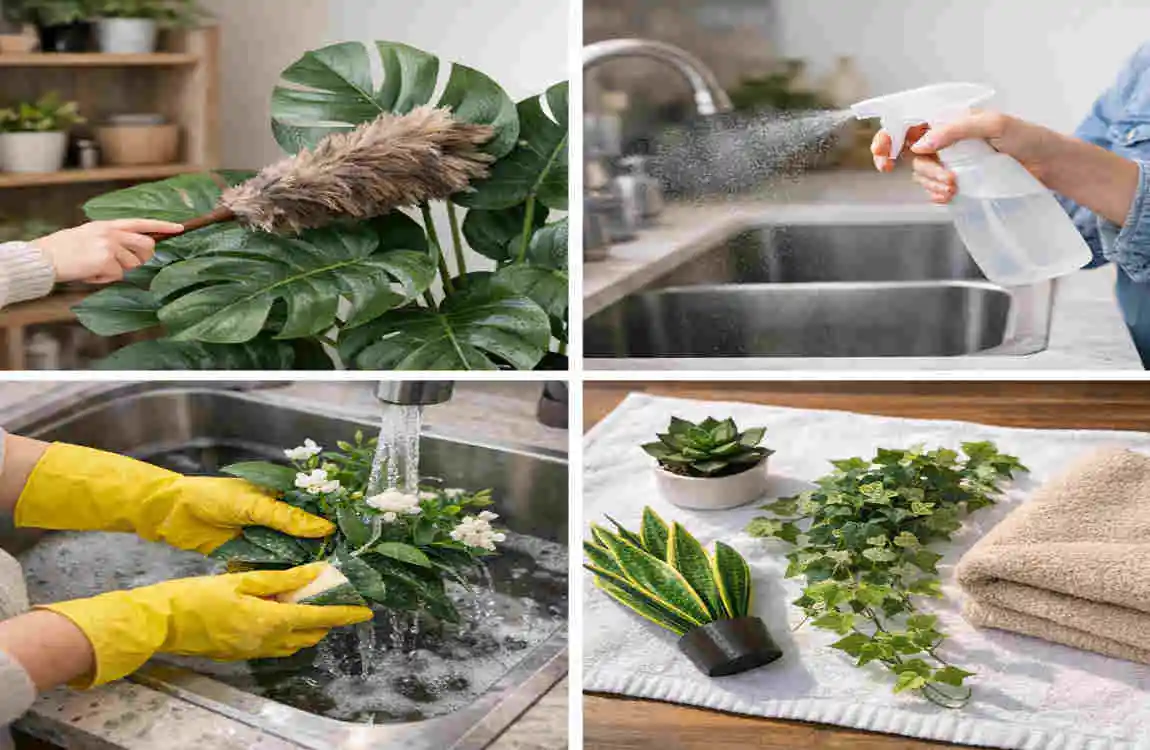
Artificial plants are low maintenance, but they are not totally maintenance-free. Dust can build up, and over time that can make them look dull.
Remove Dust Regularly
Dust is the most common issue. It settles on the leaves, making the plant look less fresh.
Use a soft microfiber cloth or gentle duster.
Wipe the leaves carefully. If the plant has many small details, you can use a soft brush or a handheld duster to reach tight areas.
Deep Cleaning
Sometimes a simple dusting is not enough.
Follow the manufacturer’s care instructions.
Some faux plants can handle a little wiping with a damp cloth. Others may have delicate materials that need extra care.
Avoid too much moisture.
Water can damage some artificial materials or loosen glue. Use only the amount needed and dry the plant properly afterwards.
Refresh Their Appearance
Over time, stems may bend or leaves may shift out of place. That is normal.
Fix bent stems and leaves.
Gently reshape them by hand. A small adjustment can make the whole arrangement look much better.
Replace damaged parts when needed.
If a leaf tears or a container cracks, replacing that part can bring the display back to life.
Keep them away from harsh heat and strong sun.
Some materials may fade if they sit in strong direct sunlight for too long. Heat can also affect plastic and fabric over time.
Simple care routine
- Dust weekly or every few weeks
- Wipe gently when needed
- Keep away from strong heat
- Adjust stems occasionally
- Replace broken containers or leaves
FAQs About Artificial Plants for Home Decor
Are artificial plants good for home decor?
Yes. They add colour, texture, and greenery to almost any room without the care that live plants require. That makes them a practical and attractive choice.
How do I make artificial plants look more realistic?
Choose plants with natural leaf shapes, soft textures, and varied shades of green. Use a nice planter and arrange the stems so they do not look too perfect.
Where should I place artificial plants in a home?
Popular places include living rooms, bedrooms, entryways, hallways, shelves, dining areas, and empty corners. The best spot depends on the plant’s size and the look you want.
Do artificial plants need maintenance?
They need very little maintenance, but dusting helps them stay fresh. A quick clean now and then makes a big difference.
Are artificial plants suitable for small homes?
Yes. Small tabletop plants, narrow floor plants, and hanging styles work very well in small spaces because they add charm without taking up too much room.
Are artificial plants better than real plants?
Neither is always better. Artificial plants are better for convenience and easy styling. Real plants are better if you want living greenery and enjoy caring for plants.
| Artificial Plant Type | Best Place | Main Benefit |
|---|---|---|
| Faux Monstera | Living Room | Creates a tropical look |
| Artificial Snake Plant | Bedroom | Stylish and low-maintenance |
| Faux Fiddle Leaf Fig | Entryway | Adds height and elegance |
| Artificial Eucalyptus | Bathroom | Fresh, calming appearance |
| Faux Hanging Plants | Shelves & Balconies | Saves floor space |
| Artificial Succulents | Desk & Coffee Table | Small and modern |
| Faux Palm Plant | Large Living Areas | Adds a tropical touch |