
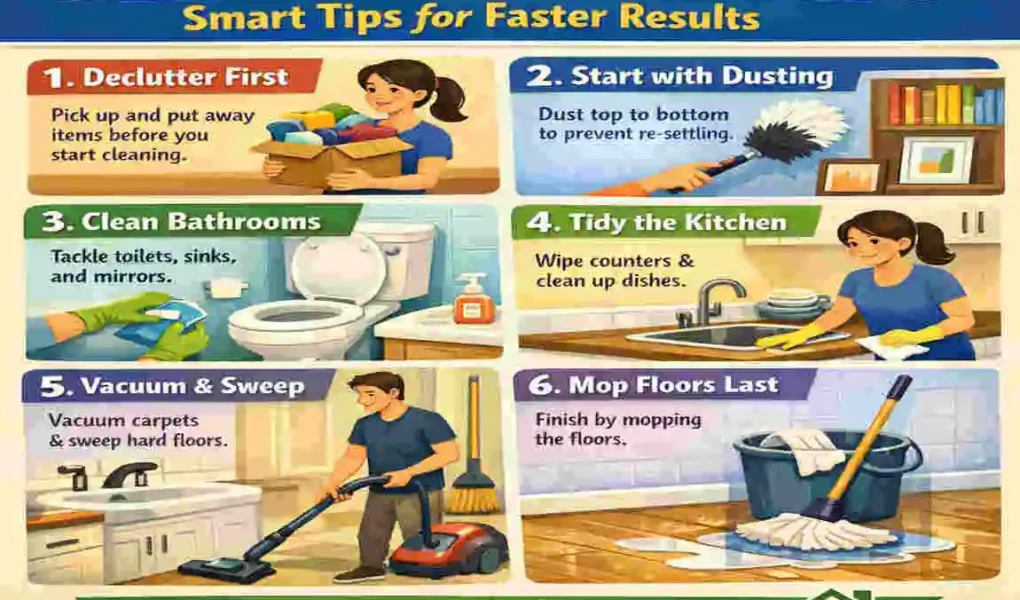
Have you ever spent hours scrubbing, dusting, and mopping your home, only to turn around and see a fresh layer of dust settling right back onto your gleaming floors? Or have you just finished wiping down your kitchen counters, only to realise you still need to dust the ceiling fan directly above them? It is an incredibly frustrating feeling.
In our fast-paced world of 2026, time is your most valuable asset. You do not have the luxury of doing the same chore twice. The secret to avoiding this endless cycle of frustration is figuring out exactly what order to clean your house. When you follow a highly specific, top-to-bottom, dry-to-wet, and least-to-most-used room strategy, you can actually cut your cleaning time by an impressive 30% to 50%.
When you clean without a plan, you are working against gravity and against yourself. But when you establish an efficient house cleaning sequence, everything changes. You stop moving dirt from one room to another, and you start actually eliminating it from your home entirely.
Did you know that professional cleaners can tackle a home twice as fast simply by using this method? Grab your favourite cleaning supplies, put on your favourite playlist, and let us dive into the ultimate routine. By the end of this post, you will master exactly what order to clean your house.
| Area/Room | Key Tasks | Why This Order? | Est. Time | |
|---|---|---|---|---|
| Prep & Declutter | Gather supplies; sort keep/toss piles in every room | Clears surfaces; avoids distractions | 10-15 min | |
| Bedrooms/Guest Rooms | Dust ceilings to baseboards; vacuum mattresses; remake beds | Dry, low-traffic; dust falls to floors last | 15-20 min/room | |
| Living Areas/Hallways | Dust shelves/TV; straighten cushions; vacuum upholstery/floors | Dust drifts downward; quick visual wins | 20-25 min | |
| Kitchen | Wipe counters/appliances; degrease stove; clean floors last | Grease/odors contained; prevents spread | 25-30 min | |
| Bathrooms | Spray showers (let sit); scrub sinks/toilets; mop floors | Wet/messy last among rooms; sanitize high-touch spots | 15-20 min/room | |
| All Floors & Final | Vacuum/sweep entire house; mop top-to-bottom; wipe switches | Catches all fallen dust; sparkling finish | 15-20 min |
Why Cleaning Order Matters
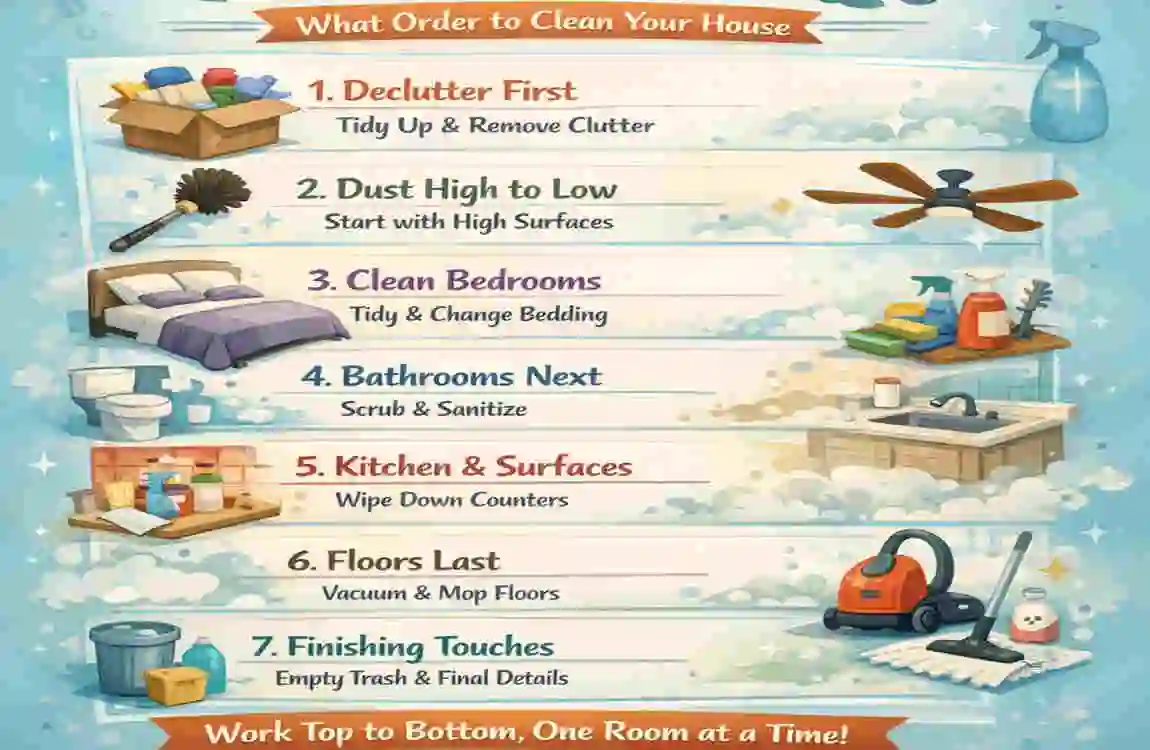
You may be wondering if the sequence of your chores makes that big of a difference. Does it truly matter if you scrub the toilet before you wipe the mirrors? The short answer is: absolutely. Discovering the right house cleaning order completely transforms your weekend chores from a gruelling marathon into a quick, satisfying sprint.
To understand why this works, we need to look at the simple science of gravity and the nature of household dirt. Gravity pulls everything downward. Dust, pet dander, and microscopic debris constantly fall from your ceiling, light fixtures, and shelves onto your floors. If you vacuum and mop your floors first, and then decide to dust your ceiling fan, all that trapped dust is going to rain down onto your freshly cleaned floor. You have instantly created double the work for yourself.
Here is exactly why mastering what order to clean your house is a game-changer for your lifestyle:
It Saves You Precious Time. When you follow a logical, room-by-room cleaning order, you never have to backtrack. You move through your home in a continuous, fluid motion. You eliminate the need to pull out the vacuum cleaner three times by tackling all the dry dirt in a single step.
It Reduces Your Physical Strain. Cleaning is a highly physical activity. Bending, reaching, scrubbing, and carrying heavy buckets of water takes a toll on your back and joints. When you plan your route properly, you carry your supplies along a linear path. You are not running up and down the stairs multiple times to grab a glass cleaner you forgot. A logical flow preserves your physical energy.
It Prevents Cross-Contamination. Certain rooms in your home are naturally greasier or more bacteria-laden than others. If you clean your greasy kitchen stove with a sponge, and then carry that same bucket of water into your pristine guest bedroom, you are tracking grease across the house. Working from the cleanest rooms toward the dirtiest rooms ensures you are not spreading grime.
It Boosts Your Mental Satisfaction. There is a massive psychological component to cleaning. When you clean randomly—wiping a counter here, picking up a sock there—your house never truly feels completely clean all at once. It feels like an endless, exhausting loop. However, when you complete a room sequentially, you experience a quick win. Closing the door on a perfectly pristine bedroom gives your brain a hit of dopamine, motivating you to conquer the next room.
The Best Order to Clean Your House: Step-by-Step Guide
Now that you understand the “why” behind the method, it is time to look at the “how.” This is the core blueprint for the best order to clean house.
Remember the two golden rules of this sequence: Always clean from the top down (ceiling to floor), and always clean from dry to wet (dusting before spraying chemicals).
Prep and Declutter Everywhere
Before you even touch a bottle of cleaning spray or plug in a vacuum, you must prep your environment. You cannot clean a house efficiently when it is covered in clutter. Trying to wipe around stacks of mail, stray shoes, and scattered children’s toys will slow you down and leave hidden pockets of dirt behind.
Grab a large laundry basket or a sturdy trash bag. Walk through every single room in your house and do a rapid-fire decluttering session. Pick up trash, gather dirty laundry, put away stray dishes, and collect items that belong in other rooms.
Sort these items into simple piles: keep, toss, or donate. Do not get bogged down in organising your closets during this step; clear the flat surfaces.
Simultaneously, gather all your cleaning supplies into one portable caddy. You will need microfiber cloths, an extendable duster, your favourite all-purpose spray, glass cleaner, and a heavy-duty scrub brush. Having everything in one bucket means you will never have to break your focus to hunt down a missing sponge.
Bedrooms and Guest Rooms
When deciding exactly what order to clean your house, you should always start in the bedrooms, working your way from the deepest part of the house outward toward the front door. Bedrooms are generally dry rooms with very little grease, making them the perfect starting point.
Begin by stripping the linens off the beds and tossing them into the washing machine. With the bed bare, look up. Grab your extendable duster and tackle the ceiling fans, the ceiling corners to remove cobwebs, and the tops of your window frames.
Next, wipe down the tops of your dressers, nightstands, and bookshelves. Notice how all the dust is falling straight down onto the bare mattress and the floor? That is exactly what you want.
Use your vacuum cleaner to gently vacuum the bare mattress surface, removing dead skin cells and dust mites. Finally, wipe down the baseboards. Once all the dust on the floor has settled (which we will deal with later), you can put fresh, clean sheets on the bed. Making the bed last ensures that zero airborne dust settles on your pristine linens.
Living Areas and Hallways
Once the bedrooms are gleaming, transition smoothly into your living room, family room, and connecting hallways. This space requires a similar dry-cleaning approach.
Start at the top. Dust the high shelving units, the tops of your door frames, and any hanging light fixtures or chandeliers.
Next, focus on your electronics. Television screens, gaming consoles, and stereo systems are absolute magnets for static dust. Use a dry, clean microfiber cloth to wipe down these screens gently. Avoid using harsh liquid chemicals directly on electronics, as they can permanently damage the sensitive displays.
Fluff your decorative throw pillows and fold your cosy blankets. If you have pets, this is the time to use a lint roller or a specialised upholstery vacuum attachment on your couches and armchairs to lift embedded hair.
This living room cleaning order prevents dust from drifting downstairs. By tackling these dry, dusty areas before you move into the wet rooms, you ensure your air quality stays crisp and fresh as you move through the house.
Kitchen Deep Clean
Now we are moving into the heavy lifting. The kitchen is the heart of the home, but it is also the absolute centre of household grease, food crumbs, and sticky spills.
Because cooking grease atomises in the air and rises, it coats the upper cabinets and the tops of your appliances. Start your kitchen routine by wiping down the exterior of your highest cabinets and the top of your refrigerator.
Move down to the countertops. Spray them generously with an all-purpose antibacterial cleaner and let the chemical sit for a full sixty seconds. Most people wipe sprays away immediately, which does not give the product enough time actually to kill bacteria. Let it sit, then wipe it clean.
Next, tackle the heavy appliances. Degrease the stovetop, wipe out the interior of the microwave, and polish the front of the oven.
Bathrooms Last Among High-Traffic Areas
You are almost at the finish line. When planning the order in which to clean your house, the bathrooms should always be the absolute last high-traffic rooms you tackle. Why? Throughout your cleaning journey, you have likely been using the bathroom sink to rinse dirty sponges, dump out dusty water, or wash your hands. If you cleaned the bathroom first, you would ruin it while cleaning the rest of the house!
Start by spraying down the shower walls, the bathtub basin, and the inside of the toilet bowl with your heavy-duty bathroom cleaners. Just like in the kitchen, walk away and let the chemicals do the hard work for you. Let them sit for at least five minutes to break down hard water stains and soap scum.
While the chemicals are soaking, grab your glass cleaner and a fresh microfiber cloth. Wipe down the bathroom mirror until it is completely streak-free. Next, wipe down the bathroom vanity and the sink basin.
Now, go back to the shower and the toilet. Give them a vigorous scrub with your brushes, then rinse them thoroughly. Finally, use a disinfecting wipe to sanitise all high-touch areas: the toilet flush handle, sink faucets, doorknobs, and light switches.
Floors and Final Wipe-Down
You have successfully dusted, wiped, and scrubbed every surface in your home from the ceiling down to your knees. Now, all the dirt, crumbs, and dust are resting exactly where you want them: on the floor.
It is time for the grand finale.
Grab your vacuum cleaner and sweep or vacuum every single floor in the entire house, starting from the bedrooms at the back and working your way toward the front door. Transition seamlessly from the carpets to the hard floors.
Once every speck of loose dirt is vacuumed up, grab your mop. Fill your bucket with hot water and a floor-safe cleaning solution. Mop your hard floors using the same path: start in the furthest room upstairs and work your way back out, so you never step on a freshly mopped, wet floor.
As you back out of the front door, take one final microfiber cloth and do a quick touch-up on the entryway windowsills and the front door handle. You are officially done!
Time-Saving Tools and Supplies Checklist
You can know exactly what order to clean your house, but if you use the wrong tools, you will still struggle. Outdated, cheap tools push dirt around instead of picking it up.
To maximise your efficiency and get that professional-level shine, pair your new routine with this essential time-saving checklist:
- Extendable Duster for Ceilings: Stop balancing on wobbly dining room chairs. An extendable duster lets you easily reach ceiling fans, crown moulding, and tall bookshelves while keeping your feet firmly planted on the ground.
- A High-Quality Robot Vacuum: While you are busy wiping down countertops and scrubbing the shower, let technology do the pre-pass for you. Running a robot vacuum an hour before you start your deep clean lifts the top layer of pet hair and crumbs, saving you massive amounts of time during your final floor sweep.
- Colour-Coded Microfiber Cloths: Throw away your old cotton rags and paper towels. Microfiber is positively charged, meaning it attracts negatively charged dust particles. Buy them in different colours so you never accidentally use the bathroom toilet cloth on your kitchen counters.
- A Carrying Caddy: As mentioned earlier, a simple plastic carrying caddy keeps your sprays, brushes, and cloths organised in a single portable station.
- Squeegee: A small, handheld squeegee is the ultimate secret weapon for achieving perfectly streak-free shower glass and brilliant bathroom mirrors in half the time it takes to wipe them with a towel.
Common Mistakes in House Cleaning Order
Even with the best intentions, many homeowners fall into bad habits that secretly sabotage their weekends. If you feel like your chores take far too long, you are likely making one of these common mistakes.
Cleaning the Floors Too Early. This is the most frequent offence. It feels incredibly satisfying to see a freshly vacuumed carpet. However, if you vacuum first, every time you wipe a counter, fluff a pillow, or dust a blind, you are dropping debris back onto the carpet. You will be forced to pull the vacuum out again, completely ruining your efficiency.
Cleaning the Bathroom Before the Kitchen. Bathrooms harbour unique bacteria, while kitchens harbour heavy food grease. If you clean your bathroom first and use those same gloves or tools in the kitchen, you risk severe cross-contamination. Always tackle the kitchen first among your wet areas to ensure food preparation surfaces remain completely sanitary.
Skipping the Top-Down Rule: Wiping a coffee table and then dusting the ceiling fan directly above it is a classic rookie mistake. Gravity always wins. Always look up before you look down.
To help you visualise these errors, here is a quick breakdown of how to fix them:
Common Cleaning Mistake: Why It Slows You Down. How to Fix It with Proper Order
Mopping/Vacuuming First, dust falls back down, requiring you to re-clean the floors. Always make floors the absolute last step in your routine.
Bathroom Before Kitchen Risks severe bacterial cross-contamination to food surfaces. Clean the kitchen first, use the bathroom sink for dirty water, and clean the bathroom last.
Skipping Decluttering: You have to stop cleaning to move items around constantly. Always do a 10-minute prep and put-away step before grabbing any sprays.
Customising the Cleaning Order for Your Home
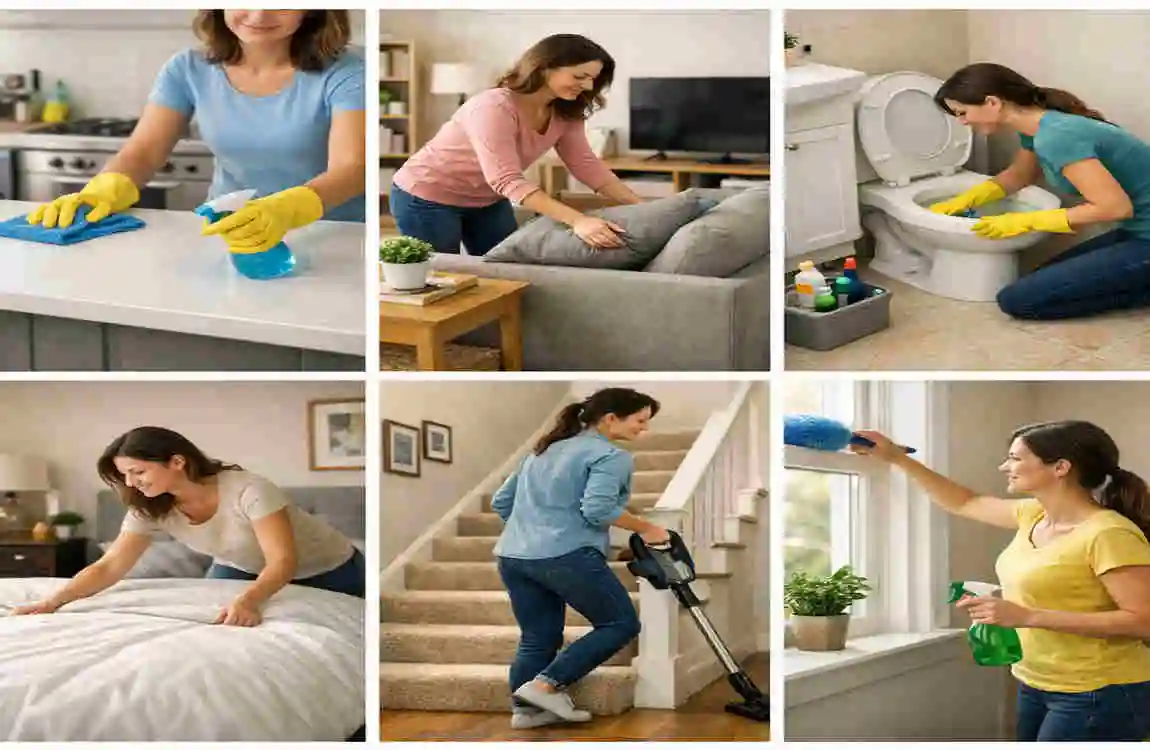
The “blueprint for cleaning your house” se is highly adaptable. Not everyone lives in a standard four-bedroom suburban house. You need to mould this sequence to fit your specific lifestyle and architecture.
For Small Apartments: If you live in a compact apartment, you can utilise the “room-by-room loop.” Because your space is smaller, you can use the top-to-bottom method for the entire apartment in a single, massive sweep. Dust every room first. Then wipe every counter. Then vacuum the whole unit. It turns a chore into a rapid, 45-minute workout.
For Busy Families and Parents. If you have small children or energetic pets, finding three uninterrupted hours on a Saturday is impossible. Instead, use “Zone Cleaning.” Break the sequence down by day. Monday is for dusting top-to-bottom. Tuesday is for kitchen wiping. Wednesday is for bathrooms. Thursday is for floors. You still follow the logical order, but you spread it out into manageable 15-minute daily chunks.
For Seasonal Deep Cleans, when spring cleaning rolls around, add your storage spaces to the very beginning of the sequence. Sweep out the garage, dust the attic, and organise the basement before you move into the main bedrooms. This prevents old, stagnant dust from storage areas from blowing into your freshly cleaned living spaces.
Frequently Asked Questions (FAQ)
What order should you clean your house, room by room? The most efficient sequence is to start with the dry, low-traffic areas and move toward the wet, high-traffic areas. The ideal list is: 1. Bedrooms and Guest Rooms, 2. Living Rooms and Hallways, 3. The Kitchen, 4. The Bathrooms, and 5. All Floors (vacuuming and mopping last).
How long does it take to clean a house using this method? Because this method eliminates backtracking and re-cleaning, the average 3-bedroom, 2-bathroom home takes between 1.5 and 3 hours to clean thoroughly, depending on the initial level of clutter.
Is this cleaning order best for busy parents? Yes! For busy parents, we highly recommend taking this exact sequence and turning it into 15-minute daily “zones.” Dust the bedrooms on Monday, wipe the kitchen on Tuesday, and tackle the bathroom on Wednesday. It keeps the house spotless without sacrificing your entire weekend.
Should I dust or vacuum first? You should always dust first. Dusting pushes debris off shelves and ceiling fans, sending it down onto the floor. If you vacuum first, you will cover your clean carpets with a fresh layer of falling dust. Always vacuum last.