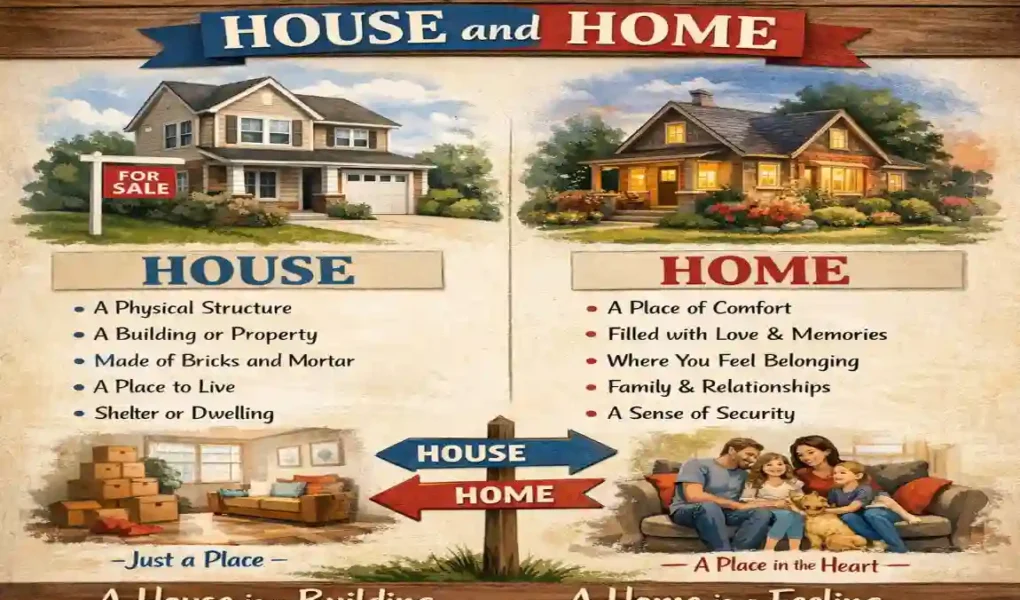
People often use the words house and home as if they mean the same thing. In daily conversation, that is understandable. Both words are connected to where we live, where we rest, and where we keep our belongings. But if you look more closely, you will see that they do not mean the same thing.
A house is the physical place. It is the building with walls, a roof, doors, windows, and rooms. A home is something deeper. It is the feeling of comfort, belonging, and emotional safety that a place gives you. One is about structure. The other is about meaning.
That is why people often ask what the difference between a house and a home is. It is a simple question, but the answer touches many parts of life. It matters in real estate because people buy houses but hope to create homes. It matters in psychology because a home can shape how safe and calm we feel. It also matters in family life, because shared memories often turn a plain building into a place people never forget.
What Is a House?
Definition of a house

A house is a physical structure built for people to live in. It is made from materials such as brick, cement, wood, steel, glass, and other building materials. It exists as a property, and it can be owned, rented, bought, or sold.
When people talk about a house in the most basic sense, they usually mean the actual building. That building may be small or large, simple or luxurious, old or new. But in every case, it is something you can see, touch, measure, and value.
A house is a real object. It has a shape, size, and address. It sits on land and serves as a place for daily life.
Characteristics of a house
A house has several clear features that make it different from the idea of home.
It is:
- Tangible and measurable
- Physical and visible
- Bought, sold, or rented
- Valued in monetary terms
- Built with rooms, walls, a roof, and structural parts
Because a house is physical, it can be described in numbers. You can say how many bedrooms and bathrooms it has, how much square footage it offers, and what materials it uses.
That is why houses are so important in real estate. They are assets. They have market value. They can increase or decrease in price depending on location, condition, and demand.
Purpose of a house
The main purpose of a house is shelter. It protects people from the weather, provides privacy, and offers a safe place to sleep, cook, rest, and live.
But a house can also be a financial asset. Many people buy a house not only to live in it, but also as an investment. Over time, the house may gain value. That makes it important in both personal life and financial planning.
A house gives structure to life. It supports daily routines. It gives people a place to store their belongings and carry out everyday tasks. In that sense, a house is functional before anything else.
Examples of a house
A house can take many forms. It does not have to be a large detached building. It may be:
- An apartment unit
- A villa
- A townhouse
- A cottage
- A duplex
- A condo unit
Each of these is a house in the physical sense because it is a living structure. But whether it feels like a home is a different question.
That difference is where the meaning begins to shift.
What Is a Home?
Definition of a home
A home is not just a physical structure. It is a place where emotional connection exists. It is where people feel safe, accepted, and comfortable. It is the place that feels like home.
You can have a house without feeling at home in it. At the same time, you can feel at home in a small apartment, a rented room, or even a temporary space if it gives you peace and emotional comfort.
That is what makes the idea of home so powerful. It is not only about where you live. It is about how that place makes you feel.
Emotional meaning of home
A home often carries deep emotions. It may represent:
- Comfort
- Love
- Security
- Peace
- Warmth
- Family
- Memory
- Identity
When people think about home, they often think about childhood, family dinners, holidays, laughter, rest, or quiet moments with loved ones. These experiences give the place emotional value.
A home becomes part of your story. It holds the moments that shape your life. You may remember the smell of your mother’s cooking, the sound of rain on the roof, or the room where you studied as a child. These are not just building details. They are emotional anchors.
What makes a house a home?
A house becomes a home when people bring life into it. That life comes from the things you do and the feelings you create inside the space.
Some of the things that turn a house into a home include:
- Personal decorations
- Family photos
- Favorite furniture
- Shared meals
- Daily routines
- Special memories
- Relationships
- Emotional warmth
A blank house may have all the right rooms, but it still feels empty until it holds your life. Once your personality, habits, and relationships fill it, the place begins to feel like home.
That is why two people can look at the same space and feel very different about it. One may see a building. The other may feel a sense of peace and belonging.
Psychological importance of home
Home is important for mental and emotional well-being. People often need a place where they feel safe enough to relax and be themselves. A good home can reduce stress and support emotional balance.
When you feel at home, your mind gets a chance to rest. You do not have to stay alert in the same way you might in public or unfamiliar spaces. You can let your guard down. That feeling matters.
A home can support:
- Emotional stability
- Stress reduction
- A sense of safety
- Stronger identity
- Better relationships
This is one reason the phrase What is the difference between house and home matters so much. A house may protect the body, but a home often protects the heart.
Key Difference Between House and Home
Physical vs emotional difference
The most important difference is simple: a house is physical, and a home is emotional.
A house is made of materials. It has rooms, walls, and a roof. It can be measured in square feet and sold for a price. A home is the feeling that lives inside that space. It is about meaning, memory, and emotional connection.
You can think of it like this:
- A house is what you live in
- A home is how that place feels to live in
That is the core difference.
Ownership vs belonging
Another way to see the difference is through ownership and belonging.
You can own a house. Your name can be on the title or the lease. But that does not always mean the place feels like home. Belonging is different. It is the emotional bond you develop with the place.
A home gives you the feeling that you matter there. It feels familiar. It feels safe. It feels like yours in a deeper sense, even if you do not legally own it.
This is why renters can absolutely have a home. You do not need a deed to feel connected to a place.
Investment vs experience
A house is often seen as an investment. People consider the price, resale value, maintenance cost, and neighborhood trends. These are practical concerns, and they matter a lot.
A home is more about experience. It holds your daily life, your memories, your comfort, and your relationships. It is where your personal story unfolds.
Both sides are important, but they serve different needs. One speaks of money and property. The other speaks to life and feeling.
Temporary vs permanent feeling
A house may change ownership. It may be sold, rented out, remodeled, or even torn down. A home, however, stays in your memory and heart long after the physical place changes.
That is why many people still feel emotionally attached to the place where they grew up, even if they no longer live there. The house may no longer belong to them, but the home remains in their mind.
That emotional connection is powerful. It can last for years or even a lifetime.
Table comparison: house vs home
FeatureHouseHome
Meaning Physical structure Emotional place
Value Monetary Emotional
Purpose Shelter Comfort & belonging
Nature Tangible Intangible
Change Can be sold Stays in memory
This table makes the difference very clear. A house is something you can point to. A home is something you can feel.
Why this difference matters in everyday life
Understanding this difference helps you think more clearly about what you want from a place where you live. Some people focus on size, style, or price. Others focus on comfort, peace, and connection. The best living space often gives you both.
When you understand the difference between a house and a home, you begin to see that a good life requires more than a roof. It needs a place that feels right.
Why the Difference Between House and Home Matters
In a real estate perspective
In real estate, people usually buy houses, not homes. The structure is what gets listed, priced, inspected, and sold. Real estate deals deal in square footage, location, condition, and market value.
But buyers rarely think only about the building. They are imagining the life they will live there. They picture family meals, holidays, quiet evenings, and future memories.
That is why homes sell with emotion, even when the paperwork is about a house.
A house may appeal because of its price or features. But a home appeals because it feels like a place where life can happen well.
In emotional well-being
A real home supports emotional well-being. It gives people a place to relax, recharge, and feel grounded. When life feels busy or stressful, home becomes the place where you return to yourself.
A house alone cannot do that by itself. The walls do not create comfort. The people, habits, and emotional tone inside the space do.
That is why some houses feel cold or empty even when they are beautiful. At the same time, a small or modest place may feel warm and comforting because of the life inside it.
In family life
Home often plays a central role in family connection. It is where people eat together, talk, laugh, argue, forgive, and grow. These shared moments create bonds.
A house gives the family a place. Home gives the family a shared emotional center.
That difference matters because family life is built on more than space. It is built on trust, routine, memory, and closeness. Home helps all of that grow.
In personal growth
The place where you live can shape your personality and habits. A safe, stable home often helps people grow with more confidence. Children especially benefit from a home that feels secure and caring.
When people feel safe, they are more likely to explore, learn, rest, and build healthy routines. In that way, home supports personal development.
So the difference between “house” and “home” is not just poetic. It affects real life in real ways.
How to Turn a House into a Home
Add personal touches
One of the easiest ways to make a house feel like home is to add your own personality. Even small changes can transform the atmosphere.
You might add:
- Family photos
- Artwork
- Books
- Plants
- Keepsakes
- Favorite blankets
- Decor that reflects your style
These small details tell your story. They make the space feel like it belongs to you.
A blank room may look neat, but it often feels temporary. Once you add personal touches, the room starts to feel lived in and loved.
Create emotional spaces
Some rooms naturally become emotional anchors in the home. Think about the places where your family gathers most often.
These spaces may include:
- The living room is for family time
- The kitchen for shared meals
- The bedroom for rest and privacy
- The dining area for conversation
- A small corner for reading, prayer, or quiet thought
When a room has a purpose beyond function, it starts to carry feeling. The more meaningful the routine, the stronger the sense of home.
Build relationships inside the space.
A home is built through relationships. The more people share their lives in the space, the more emotional value it gains.
You can build that feeling through:
- Shared meals
- Honest conversation
- Family traditions
- Hosting guests
- Celebrating milestones
- Supporting one another through hard times
These moments turn walls and furniture into memory. That is what gives a home its heart.
Add comfort and warmth.
Comfort plays a huge role in the feeling of home. You do not need an expensive design to create it. Often, simple things work best.
Consider:
- Warm lighting
- Soft colors
- Comfortable seating
- Cozy blankets
- Clean spaces
- Pleasant scents
- A layout that feels easy to move through
When a house feels physically comfortable, it is easier for the emotional feeling of home to grow.
Maintain positive energy
A home also needs peace. A clean, calm, and respectful atmosphere helps people feel safe and relaxed.
That does not mean life must be perfect. Every home has stress sometimes. But it helps to create a space where kindness, order, and care are present more often than not.
A peaceful home usually feels more like home because people want to return to it.
Simple ways to turn a house into a home
- Personalize the space
- Create routines
- Spend time together
- Add warmth and comfort
- Protect peace and belonging
These steps do not require luxury. They require attention, care, and intention.
Cultural and Social Perspective of House vs Home
Different meanings across cultures
The idea of house and home can change from one culture to another. In some cultures, family connection is the center of everything, so home is seen as a living relationship rather than a property.
In other cultures, ownership and housing status may carry more social importance. A house may be seen as a sign of progress, success, or security.
Even so, most people understand home as more than a structure. Across cultures, the emotional side of home remains strong.
Social status and housing
In some societies, a large or beautiful house is seen as a sign of wealth. People may admire the property as a symbol of success.
But social status does not automatically create a home. A beautiful house may still feel empty if the people inside it do not feel connected, safe, or comfortable.
On the other hand, a smaller place can still be a strong home if it holds love and stability.
Modern lifestyle impact
Modern life has changed how people think about living spaces. Many people rent instead of own. Others move frequently for work, school, or family reasons.
Because of that, the emotional idea of home has become even more important. People want a place that feels stable, even if they do not stay forever.
This is one reason the question of what the difference is between a house and a home matters so much in today’s world. A house may change. A home is created through connection, wherever you are.
Common Misconceptions About House and Home
“Big house means better home”
This is not always true. A large house may offer more space, but space alone does not create warmth or a sense of belonging. Sometimes big homes can even feel less personal if they are not filled with life.
What matters is how the space is used and how it feels to the people inside it.
“Home requires ownership”
Many people think only owners can truly have a home. That is not true. Renters, shared households, and temporary living spaces can all become home if the people in them feel connected and safe.
Home is about belonging, not just legal ownership.
“Luxury makes it a home”
A luxury kitchen, expensive furniture, or stylish décor can make a house look impressive. But luxury does not automatically create an emotional connection.
A home is made by feeling, memory, and care. A simple room can feel more like home than a very expensive one.
What these misconceptions miss
These ideas often confuse appearance with meaning. A house may look great from the outside, but still not feel right inside. A home may be modest, but still feel deeply comforting.
That is why it is important to think beyond looks.
Real-Life Examples of House vs Home
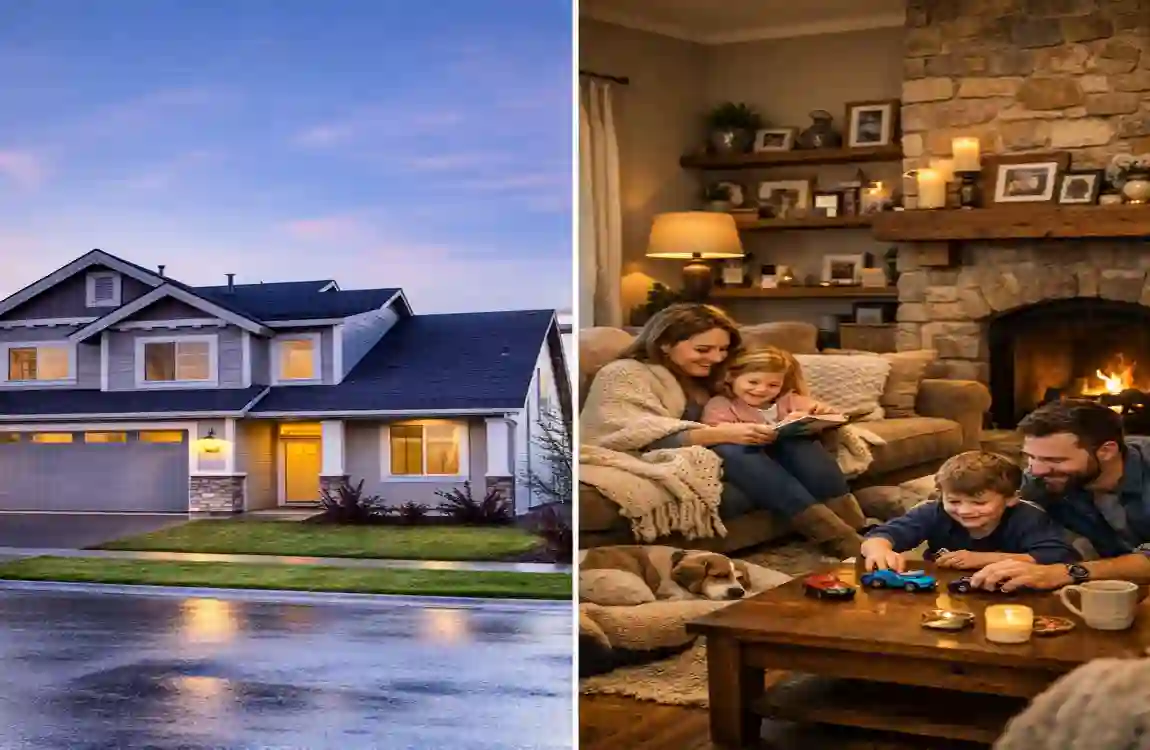
A newly purchased empty apartment is a house in the practical sense. It is a physical space, but it may not yet feel personal. Once the owner moves in, adds furniture, creates routines, and shares moments there, it begins to feel like home.
A small rented room may become a home if it gives someone peace, safety, and a sense of self. Even if the person does not own it, the emotional connection can still be strong.
A childhood house may no longer belong to you, but it may still feel like home in memory. The building may change, but the feelings attached to it can remain.
A family home becomes more than a place when it holds years of shared experience. Holidays, dinners, conversations, celebrations, and even difficult times can all make that place unforgettable.
These examples show the same truth: a house is built, but a home is lived and felt.
FAQs
What is the difference between a house and a home?
A house is a physical structure where people live. A home is the emotional place where people feel safe, comfortable, and connected.
Can a rented house be a home?
Yes, absolutely. A rented place can feel like home if it offers comfort, a sense of belonging, and emotional security.
What turns a house into a home?
A house becomes a home through personalization, relationships, shared memories, comfort, and emotional warmth.
Why is home more important than a house?
Home matters because it supports emotional well-being, family connection, and a sense of belonging. A house shelters you, but a home gives you meaning.
Is every house a home?
No. A house becomes a home only when people create emotional connection, comfort, and personal meaning inside it.
Can a home exist without ownership?
Yes. People can feel at home in places they rent, share, or visit regularly if the space gives them peace and belonging.Q7: Why do people get attached to their childhood home?
Because a childhood home often holds deep memories, family bonds, and important life experiences. That emotional connection can last for years.
| Aspect | House | Home |
|---|---|---|
| Meaning | A physical structure/building where people live | A place filled with emotional connection, comfort, and belonging |
| Nature | Material and concrete | Emotional and personal |
| Focus | Property, ownership, architecture | Feelings, relationships, memories |
| Value | Financial or market value | Sentimental and emotional value |
| Changeability | Can be sold or rented easily | Stays meaningful even if location changes |
| Example | A 3-bedroom brick building | A house filled with family love and memories |
| Purpose | Provides shelter | Provides comfort, identity, and security |