If you are asking how much a house costs in the Philippines, the short answer is: it depends a lot on location, size, and type of property.
In the Philippines, house prices can change quickly from one city to another. A home in Metro Manila may cost several times as much as a similar house in a provincial area. Even inside the same city, prices can vary depending on the neighbourhood, road access, nearby schools, and the quality of the build.
How Much Is a House in the Philippines?
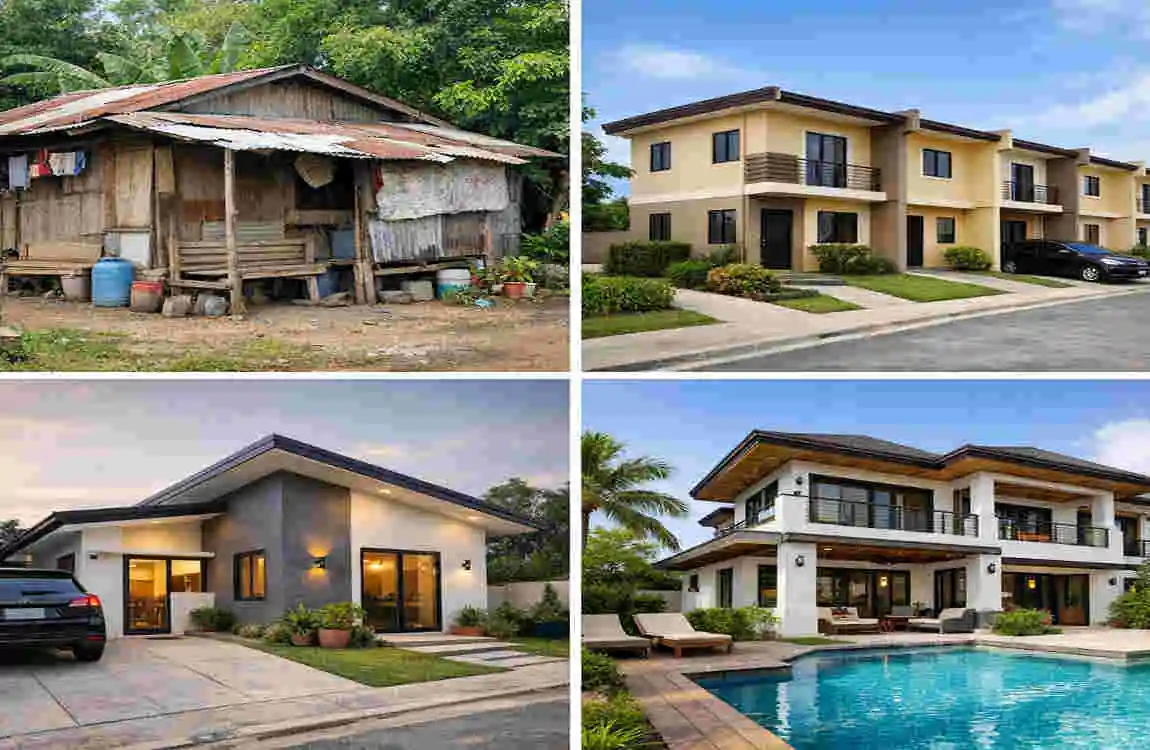
Average House Prices
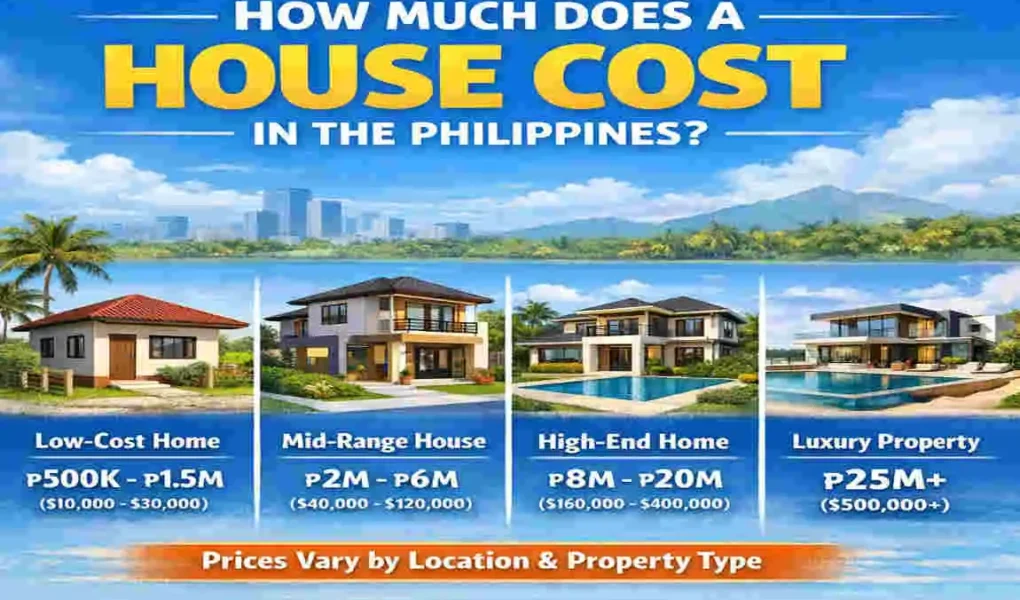
The average home price that buyers in the Philippines can expect is wide, but these are useful guide ranges:
- Entry-level homes: around PHP 1.5 million to PHP 3 million
- Mid-range homes: around PHP 3 million to PHP 8 million
- Luxury properties: usually PHP 10 million and above
Affordable houses in the Philippines are often found in suburban or provincial areas. These luxury homes may be smaller, simpler, and farther from major business centres, but they are still a good choice for many families.
Average Price Per Square Meter
The house price per square meter in the Philippines also changes by area:
- Metro Manila: about PHP 80,000 to PHP 250,000+ per sqm
- Major cities like Cebu or Davao: about PHP 40,000 to PHP 120,000 per sqm
- Provincial areas: about PHP 20,000 to PHP 60,000 per sqm
The more central the area, the higher the price. That is why two houses of the same size can have very different prices.
House Prices by Location
Metro Manila
Metro Manila has the highest house prices in the Philippines. Areas like Makati, BGC, Quezon city, and Alabang are especially expensive. A small townhouse or house can already cost several million pesos, while Premium homes can reach much higher.
Cebu
Cebu is one of the strongest property markets outside Metro Manila. Prices are still high in city centres and popular suburbs, but they are often more affordable than in Manila. Cebu is a common choice for buyers who want urban living without the highest capital-city prices.
Davao
Davao usually offers more space for the money. Homes here are often cheaper than in Cebu and Metro Manila, especially in outer areas. It is a good market for buyers seeking a balanced cost of living and property values.
Clark & Pampanga
Clark and Pampanga have grown rapidly due to business activity, transportation access, and new developments. Prices are rising, but many buyers still see these areas as good value compared with Metro Manila.
Provincial Cities
Provincial cities often offer the most affordable housing for Philippine buyers. You may get a larger lot or a bigger house for a lower price. The trade-off is that some locations may have fewer transportation options or fewer nearby commercial centres.
Location Average House Price Price per sqm Best For
Metro Manila , PHP 5M to PHP 20M+ , PHP 80K to PHP 250K+ , Buyers with higher budgets
Cebu PHP 3M to PHP 12M , PHP 40K to PHP 120K , city living with strong growth
Davao PHP 2.5M to PHP 8M, PHP 30K to PHP 80K. Families wanting more space
Clark & Pampanga, PHP 2.5M to PHP 10M, PHP 35K to PHP 90K, Commuters and investors
Provincial Cities : PHP 1.2M to PHP 5M , PHP 20K to PHP 60K , Budget-conscious buyers
Factors That Affect House Prices
Location
Location is the biggest price driver. A home near business districts, schools, hospitals, malls, and transport hubs will cost more. Buyers pay extra for convenience and time savings.
Lot Size
A bigger lot usually means a higher price. If the land area is large, the value rises even if the house itself is simple.
House Design
Modern designs, better materials, and finished interiors all push the price up. A basic unit costs less than a home with custom finishes, landscaped space, or added rooms.
Property Age
New homes usually cost more than older ones. Older homes may be cheaper, but they may also need repairs, repainting, or upgrades.
Nearby Amenities
Homes near schools, offices, highways, and shopping areas often have higher values. People are willing to pay more for daily convenience.
Market Demand
When more people want homes in one area, prices go up. This happens often in growing cities and new development zones.
Types of Houses and Their Costs
Townhouses
Townhouses are a popular choice for budget-minded buyers. They are usually cheaper than single-detached homes and are well-suited to small families or first-time buyers.
Single Detached Homes
These cost more because they offer more privacy and more land. They are ideal for families who want more space and freedom.
Duplex Houses
A duplex has two separate living units in one structure. It can be a practical option if you want to live in one unit and rent the other.
Condominiums
Condos are not houses in the traditional sense, but many buyers compare them when checking the cost of buying a house in the Philippines. They are usually easier to maintain and are common in cities.
Luxury Villas
Luxury villas are high-end homes with Premium locations, large lots, and upgraded features. These are for buyers with much larger budgets.
Property Type, Typical Price Range, Ideal Buyer
Townhouse PHP 1.5M to PHP 5M First-time buyers
Single Detached Home PHP 3M to PHP 15M+ Growing families
Duplex House PHP 2M to PHP 8M Owners who want rental potential
Condominium PHP 2M to PHP 20M+ city buyers and investors
Luxury Villa PHP 15M+ High-budget buyers
Additional Costs When Buying a House
Buying a home is not just about the listing price. You should also prepare for extra costs.
Down Payment
Most sellers or lenders require a down payment, typically 10% to 20% of the property’s price.
Taxes
You may need to pay taxes depending on the transaction setup. These can add a large amount to the total cost.
Registration Fees
These cover the official registration of the property in your name.
Transfer Fees
Transfer fees are paid when ownership is moved from the seller to the buyer.
Legal Fees
If you use a lawyer or a document specialist, legal fees may also apply.
Home Insurance
Many lenders require insurance, and even if they do not, it is still smart to protect your home.
Can Foreigners Buy a House in the Philippines?
Ownership Rules
Yes, foreigners can buy a house structure in some cases, but land ownership restrictions apply. This is important to understand before you decide.
Land Ownership Restrictions
In general, foreigners cannot own land in the Philippines. They may use long-term arrangements, but direct land ownership is limited.
Condo Ownership
Foreigners can own condominium units, as long as the foreign ownership share in the building stays within the legal limit.
Buying Through Marriage or Corporation
Some foreigners buy property through a Filipino spouse or a qualified corporation, but these options must follow the law very carefully.
Home Financing Options
Bank Home Loans
Banks offer home loans with set interest rates and monthly payments. These are common for salary earners and business owners with good documents.
Pag-IBIG Housing Loan
The Pag-IBIG Fund is one of the most popular ways to finance a home. It is often used by Filipino workers who want lower monthly payments and longer terms.
In-House Financing
Some developers offer in-house financing. This can be easier to get, but the interest rate is often higher.
Loan Requirements
Most lenders ask for:
- Valid ID
- Proof of income
- Employment or business documents
- Tax forms
- Property documents
A strong credit history also helps.
Tips for Buying a House in the Philippines
- Set a realistic budget before you start looking.
- Compare locations so you know what your money can buy.
- Work with licensed real estate agents to reduce risk.
- Inspect the property carefully for damage or needed repairs.
- Verify legal documents before paying anything.
- Consider resale value if you sell later.
These simple steps can save you money and stress.
Is Buying a House in the Philippines Worth It?
For many people, yes. A home can be a good long-term asset because property values may rise over time. It can also create rental income if you buy in a good location.
The best buyers are usually those who plan to stay long term, want stable monthly housing costs, or are looking for a property that may grow in value. If your budget is tight, start with a smaller home or a lower-cost area.
Frequently Asked Questions
How much is a house in the Philippines on average?
A typical house can cost anywhere from PHP 1.5 million to PHP 8 million, depending on location and type.
What is the cheapest city to buy a house in the Philippines?
Many provincial cities are cheaper than Metro Manila, Cebu, or Clark areas.
Can foreigners own a house in the Philippines?
Foreigners can own certain types of property, but land ownership is restricted. Condominiums are usually the easiest option.
How much down payment is required to buy a house?
Down payments are often around 10% to 20% of the total price.
Is buying a house cheaper than renting in the Philippines?
It depends on the area and your time frame. Buying can be better in the long term, while renting may cost less upfront.
What are the hidden costs of buying a house?
Hidden or extra costs may include taxes, fees, legal costs, insurance, and repairs.
| Category | Details |
|---|---|
| Average House Cost | ₱2 million–₱15 million for standard homes, depending on location and property type. |
| Budget Homes | ₱800,000–₱2 million (small houses in provincial areas or affordable housing projects). |
| Mid-Range Homes | ₱3 million–₱8 million (suburban homes, townhouses, and family residences). |
| Luxury Homes | ₱15 million–₱100+ million (high-end properties in prime cities and exclusive villages). |
| Cost per Square Meter | Around ₱25,000–₱120,000+ per square meter, depending on location and construction quality. |
| Most Affordable Areas | Provincial cities and rural municipalities generally offer lower housing prices. |
| Most Expensive Areas | Metro Manila, Makati, Bonifacio Global City (BGC), and other prime urban districts. |
| Factors Affecting Price | Location, lot size, floor area, property type, amenities, developer, and market demand. |
| Additional Costs | Taxes, registration fees, transfer fees, legal fees, home insurance, and maintenance expenses. |
| Best for First-Time Buyers | Affordable housing projects, condominiums, and townhouses in developing suburbs. |