Buying or selling a home in the UK can feel confusing, especially because the word “sold” is often used too early. Many people think a house is sold as soon as an offer is accepted, but that is not always true in legal terms.
If you are wondering when a house is considered sold in the UK, the short answer is this: a property is usually not legally sold until exchange of contracts, and ownership does not transfer until completion. That difference matters a lot for buyers, sellers, and anyone in a property chain.
What Does “House Sold” Mean in the UK?
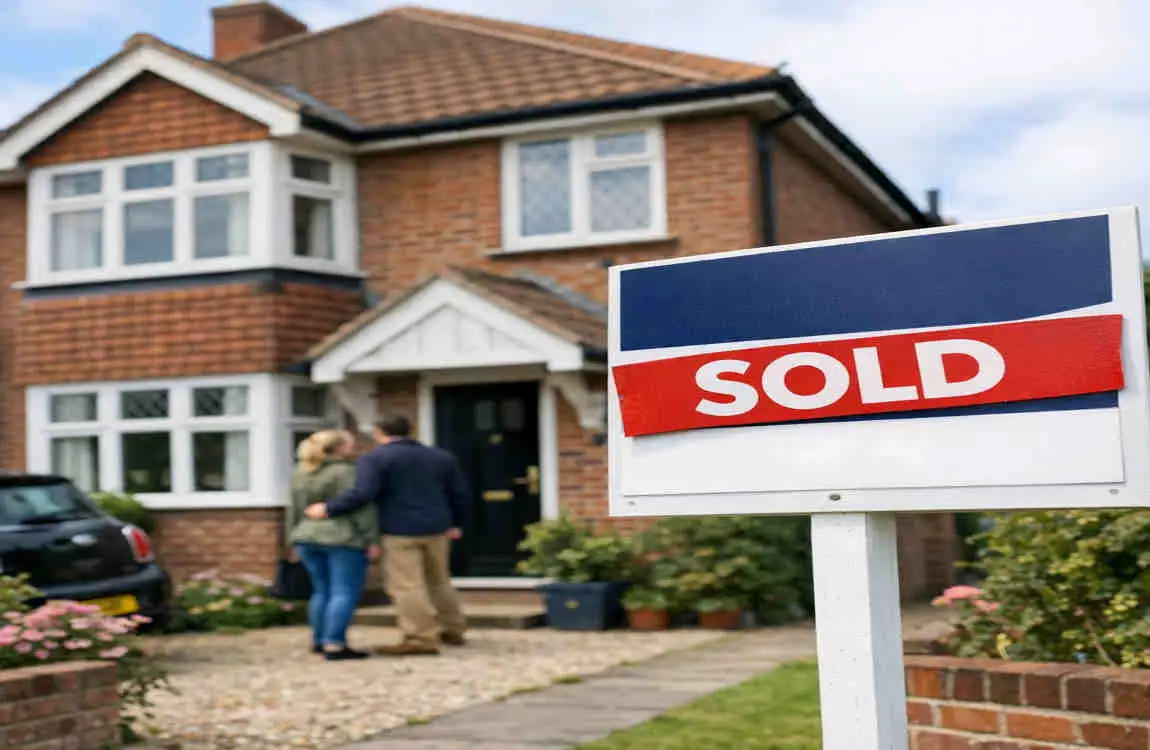
In everyday language, people often say a house is “sold” when an offer is accepted. Estate agents also use terms like Sold STC or under offer. But these words do not mean the legal sale is complete.
A house is only truly sold in a legal sense when the buyer and seller exchange contracts. Before that, either side can usually walk away.
So, there are really two meanings of sold:
- Estate agent meaning: the property has a buyer lined up
- Legal meaning: the contract is binding, and the sale is committed
This is why many sales still fall through after an offer looks like it’s been accepted.
When Is a House Considered Sold in the UK?
The house is considered sold at different stages depending on what you mean by “sold.” Let’s look at the key points in the process.
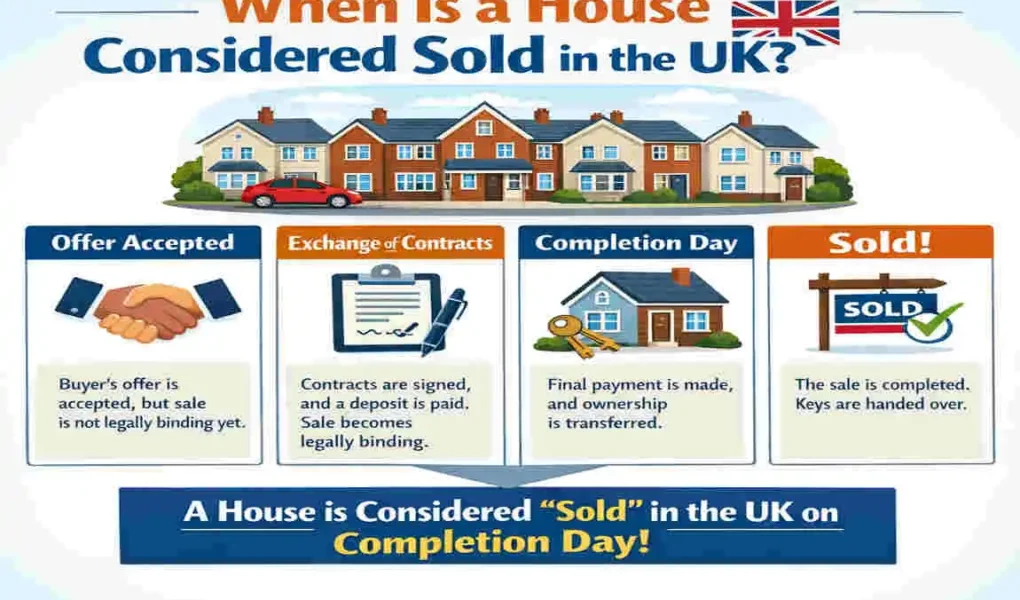
Offer Accepted
This is the first big step. The seller accepts the buyer’s offer, and both parties move forward.
At this point, though, nothing is legally binding yet. The seller can still change their mind, and the buyer can also pull out.
So, an accepted offer is generous, but it does not mean the house has been legally sold.
Property Marked as Sold Subject to Contract (SSTC)
You will often see Sold Subject to Contract or SSTC on estate agent listings. This means the seller has accepted an offer, but the legal paperwork is still going through.
This stage gives both sides time to do things like:
- arrange the mortgage
- complete searches
- review the survey
- finalize legal checks
Even at this stage, the sale can still fall through. SSTC is not the same as ownership transfer.
Exchange of Contracts
This is the moment when the sale becomes legally binding.
At exchange:
- buyer and seller sign matching contracts
- the buyer usually pays a deposit
- both sides must complete the sale
- backing out becomes very risky and expensive
From this point, the property is effectively committed to the buyer, even though the buyer does not yet own it.
Completion Day
Completion is the final stage. This is when:
- the full money is transferred
- the buyer gets the keys
- the seller moves out
- the ownership changes hands
So, if you are asking when you own a house in the UK, the answer is on completion day, not when the offer is accepted.
UK House Buying Timeline
Here is a simple look at the usual process from start to finish.
Property Viewing
You visit the home, assess its condition, and decide whether it suits your needs.
Making an Offer
You tell the estate agent how much you are willing to pay.
Offer Accepted
The seller agrees, but the deal is still not legally fixed.
Mortgage Application
If you need a mortgage, you apply and wait for approval.
Property Survey
A survey helps find any hidden problems or repair issues.
Conveyancing Process
Solicitors or conveyancers handle the legal checks and paperwork.
Exchange of Contracts
This is when the sale becomes legally binding.
What Is Sold Subject to Contract (SSTC)?
Sold Subject to Contract means a buyer has made an offer, the seller has accepted, and both parties are now working through the legal process.
Estate agents use this term because it shows the property is in progress, but not finished.
Can the Sale Fall Through?
Yes, it can. Until exchange, either side may still withdraw.
Common Misconception
Many buyers think SSTC means the house is theirs. It does not. It only means the sale is moving ahead.
Can a House Sale Fall Through Before Completion?
Yes, and this happens more often than many people expect. A sale can fall apart at several points before completion.
Common Reasons
- Mortgage declined
- Bad survey results
- Gazumping – another buyer offers more
- Gazundering – buyer lowers the offer late
- Chain collapse
- Buyer changes mind
The earlier in the process this happens, the easier it is to recover. After exchange, it becomes much harder to back out safely.
What Happens After Exchange of Contracts?
Once contracts are exchanged, the sale is locked in. Both sides now have a legal duty to complete.
At this stage:
- the completion date is confirmed
- buildings insurance should usually be in place
- removals can be booked
- final money arrangements are checked
- the buyer prepares to move in
This is a good time to stay in close contact with your solicitor or conveyancer. Small delays can still happen, but the hardest part is usually done.
What Happens on Completion Day?
Completion day is the final step in the UK property sale process.
What Usually Happens
- the buyer’s solicitor sends the money
- the seller’s solicitor confirms receipt
- the estate agent is told to release the keys
- the buyer collects the keys and moves in
- the Land Registry records the ownership change later
From the buyer’s point of view, this is the moment the property truly becomes theirs.
How Long Does It Take to Sell a House in the UK?

There is no single fixed timeline, but many sales take several weeks to a few months.
Factors That Affect Speed
- whether there is a chain
- how fast mortgage approval arrives
- how quickly documents are returned
- whether the survey finds problems
- solicitor workload
- how well both sides communicate
Chain vs Chain-Free Sales
A chain-free sale is usually faster because fewer people are waiting on each other. A chain sale can take longer because one delay affects everyone involved.
Common Mistakes Buyers and Sellers Make
It is easy to get the process wrong if you are new to it. Here are some common mistakes.
- assuming an accepted offer means the luxury house is sold
- booking movers too early
- ignoring survey warnings
- leaving paperwork until the last minute
- not replying quickly to solicitors
- making plans before exchange
A little patience can save a lot of stress.
Frequently Asked Questions
When is a house legally sold in the UK?
A house is legally sold at exchange of contracts, when both sides become committed.
Is a house sold after the offer is accepted?
No. An accepted offer is not the same as a legal sale.
What does Sold Subject to Contract mean?
It means the offer is accepted, but the legal process is still ongoing.
Can a seller pull out after accepting an offer?
Yes, they usually can before exchange of contracts.
Can a buyer withdraw before exchange?
Yes, the buyer can usually walk away before exchange too.
Is exchange of contracts the same as completion?
No. Exchange is when the deal becomes binding. Completion is when ownership transfers.
| Stage | What It Means | Is the House Legally Sold? |
|---|---|---|
| Offer Accepted | The seller accepts the buyer’s offer, but either party can still withdraw. | No |
| Conveyancing Begins | Solicitors carry out legal checks, searches, and prepare contracts. | No |
| Mortgage & Surveys Completed | Buyer secures financing and property inspections are finalized. | No |
| Exchange of Contracts | Buyer and seller sign and exchange contracts, making the sale legally binding. | Yes |
| Completion Day | Remaining funds are transferred, and the buyer receives the keys and ownership transfers. | Ownership officially changes |