
House numbers are something we encounter every day, yet we often overlook their importance. They play a vital role in our daily lives, ensuring that every property is uniquely identified and easily located. From helping emergency services respond quickly to ensuring your online shopping packages arrive at the right destination, house numbers play an indispensable role in modern society.
A house number is a unique numerical (or alphanumerical) designation assigned to a property within a street or locality. It forms a key part of an address, allowing each building to be uniquely identified within a given area.
What Is House Number?
While the street name identifies the road or locality, the house number pinpoints the exact property on that street. For example, in the address “123 Main Street,” “123” is the house number, and “Main Street” is the street name.
Why Are House Numbers Unique?
House numbers are intentionally unique within a street or block to avoid confusion. This uniqueness ensures accurate navigation, delivery services, and recordkeeping.
Why Are House Numbers Important?
House numbers are more than just decorative signs outside your home—they are a crucial part of modern infrastructure. Let’s explore their significance in detail.
Easy Property Identification
One of the main purposes of a house number is to help people locate properties quickly and efficiently. Whether it’s a friend visiting, a service technician arriving for repairs, or a first-time guest, a clear house number ensures there’s no confusion in finding your home.
Faster Emergency Response
In emergencies, every second counts. Ambulances, firefighters, and police need to find the right location quickly. A visible house number can make all the difference in ensuring they reach you without delays.
Accurate Mail and Package Delivery
From traditional postal services to modern courier companies, house numbers are essential for accurate delivery. Online shopping, in particular, depends on precise addresses to ensure packages arrive at the correct destination.
Utility Services
House numbers play a crucial role in the installation and maintenance of essential utilities like:
- Electricity
- Water
- Gas
- Internet
Service providers rely on accurate addresses to set up and troubleshoot these services.
How Are House Numbers Assigned?
Assigning house numbers isn’t random—it follows specific rules and guidelines. Let’s take a closer look at how they are determined.
Local Government Guidelines
Local municipal authorities or city councils are typically responsible for assigning luxury house numbers. These numbers are carefully planned to ensure logical organization within neighborhoods.
Odd and Even Numbering System
In most countries, odd numbers are assigned to one side of the street and even numbers to the other. This system makes it easier to locate properties.
Sequential Numbering
House numbers are often assigned sequentially, starting from one end of the street to the other. This logical order reduces confusion.
Corner Properties
Corner properties may have unique challenges. Some receive two numbers—one for each street they face—while others are assigned a single number based on the main entrance.
Apartment and Unit Numbers
For multi-unit buildings like apartments, each unit is given a unique identifier (e.g., 101, 102, etc.) to distinguish it from others in the same complex.
Different Types of House Number Systems
There isn’t a one-size-fits-all approach to house numbering. Different regions use various systems based on their geography and urban planning.
Type of System Description
Sequential Numbering Numbers are assigned in order along the street.
Distance-Based Numbering Numbers reflect the distance from a starting point (e.g., 100 meters = #100).
Grid Numbering: Common in cities; follows a grid pattern for easy navigation.
Rural Addressing Designed for sparsely populated areas, often distance-based.
Apartment Numbering Unique identifiers for each unit in multi-family buildings.
Benefits of Having a Clearly Visible House Number
A visible house number isn’t just a convenience—it’s a necessity for safety, efficiency, and ease of access.
Improves Safety
A clearly visible house number ensures emergency services can reach you without delays, potentially saving lives.
Saves Time
Whether it’s a delivery driver or a first-time visitor, a visible house number eliminates guesswork and saves time.
Helps Visitors Find Your Home
A well-placed, easy-to-read house number ensures visitors don’t get lost, making your home more accessible.
Supports GPS Navigation
Modern GPS systems rely on accurate address data, including house numbers, to provide precise directions.
Prevents Delivery Errors
A visible and correct house number reduces the chances of failed or misdirected deliveries.
Where Should You Place Your House Number?
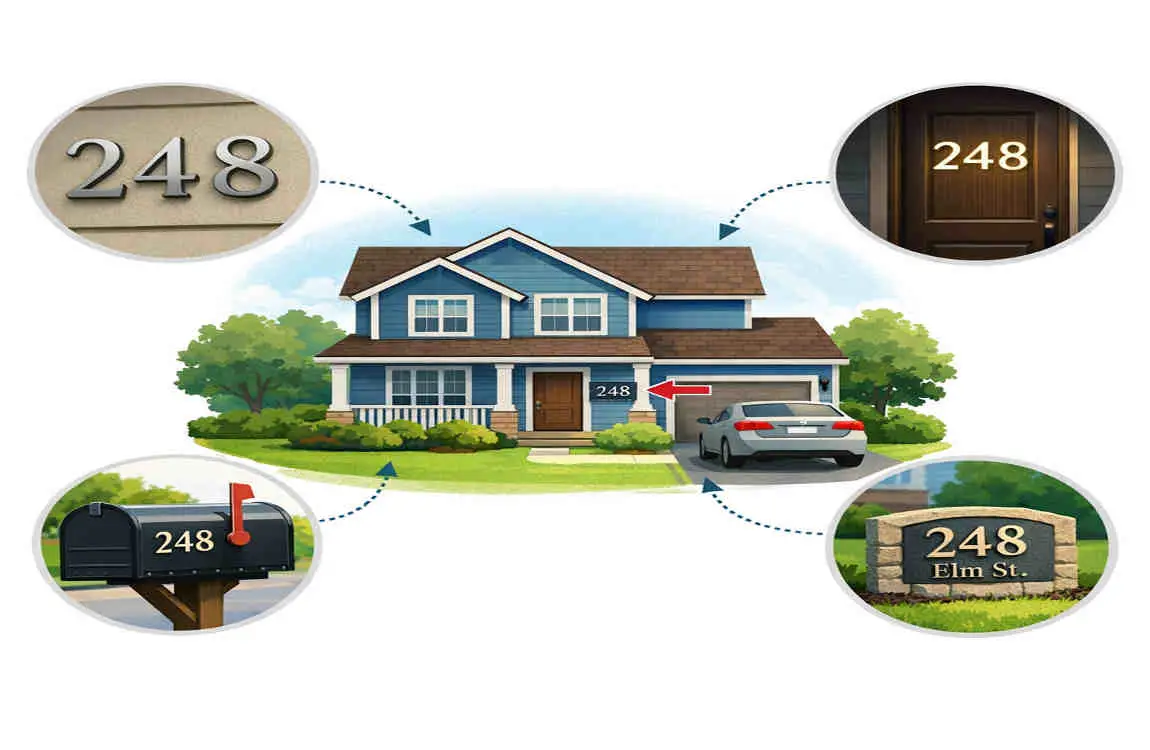
To ensure your house number is effective, it needs to be visible and strategically placed. Here are some ideal locations:
- Front Wall: The most common placement, ensuring visibility from the street.
- Mailbox: Particularly useful for modern homes with large front yards.
- Fence or Gate: Best for properties with gated entrances.
- Porch or Near the Entrance: For easy identification by visitors.
- Visibility from the Road: Ensure plants or decorations do not obstruct it.
- Proper Lighting: Add lighting to ensure visibility at night or in poor weather.
What Makes a Good House Number Sign?
Not all house number signs are created equal. Here’s what you should consider for maximum visibility and durability:
- Large and Readable Font: Use bold, easy-to-read numbers.
- Weather-Resistant Materials: Opt for materials like metal, plastic, or coated wood to withstand the elements.
- Reflective Finish: A reflective coating ensures visibility at night.
- Proper Color Contrast: Choose colors that stand out against your home’s exterior.
- Durable Installation: Ensure the sign is securely mounted to prevent damage or loss.
Common Problems with House Numbers
Despite their importance, house numbers can sometimes cause issues. Here are some common problems:
- Missing Numbers: Makes it difficult for visitors or services to locate the property.
- Faded Signs: Over time, weather can cause numbers to fade.
- Hidden by Plants: Obstructed numbers are a common issue in gardens.
- Incorrect Numbering: Errors in assignment can lead to confusion.
- Duplicate Addresses: Rare but problematic in some areas.
- Hard-to-Read Fonts: Decorative fonts may look nice, but can you change your house number?
Yes, but it requires approval from local authorities. Here’s how the process typically works:
- Submit a request to your local council or municipality.
- Comply with regulations for house numbering in your area.
- Update your address with your banks, utilities, and service providers.
House Numbers Around the World
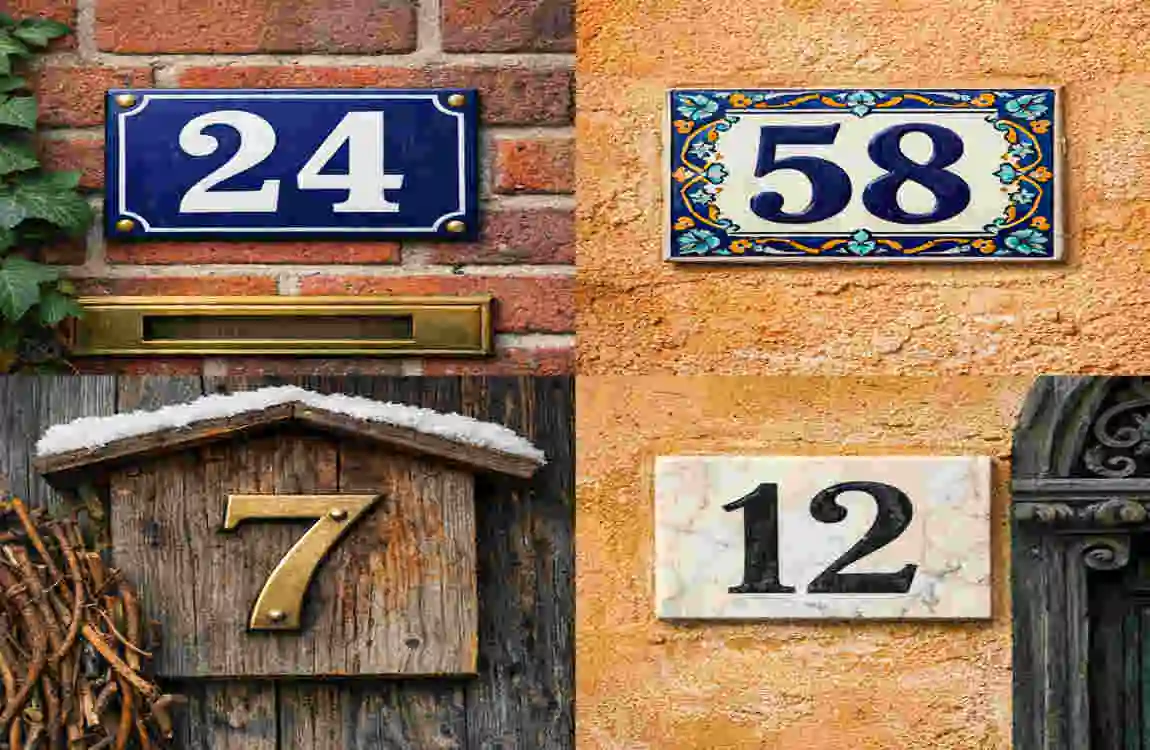
House numbering systems vary significantly by country and region. Here’s a quick overview:
- United States: Odd/even numbering is common; numbers typically increase in one direction.
- United Kingdom: Numbers are sequential; some properties use names instead of numbers.
- Canada: Follows similar rules to the U.S., with municipal guidelines.
- Australia: Uses distance-based numbering in rural areas.
- Europe: Urban areas often use grid or sequential numbering.
Tips for Homeowners
Keep your house number visible and effective with these simple tips:
- Regularly clean your house number to keep it readable.
- Replace faded or damaged signs promptly.
- Add lighting for nighttime visibility.
- Ensure numbers are visible from the street.
- Verify your official address records with local authorities.
Common Myths About House Numbers
Let’s debunk a few misconceptions:
- Bigger numbers don’t necessarily mean newer homes—numbering depends on the system in place.
- House numbers are random: They follow strict guidelines.
- Every country uses the same system: Systems vary widely by region.
- House numbers never change: They can be updated, but it requires proper approval.
Frequently Asked Questions (FAQ)
What is a house number?
A house number is a unique identifier assigned to a property within a street or locality.
Why does every house need a house number?
House numbers ensure properties are uniquely identified for navigation, mail delivery, and emergency services.
Who assigns house numbers?
Local governments or municipal authorities are responsible for assigning house numbers.
Can a homeowner change their house number?
Yes, but it requires approval from local authorities and proper updates to address records.
Why are odd and even house numbers used?
The odd/even system helps organize properties logically, making navigation easier.
Where should a house number be displayed?
House numbers should be placed where they are easily visible from the road, such as on the front wall, mailbox, or gate.
| Purpose | Explanation |
|---|---|
| Property Identification | Gives each home a unique number for easy identification. |
| Mail & Package Delivery | Helps postal workers and couriers deliver mail and parcels accurately. |
| Emergency Response | Enables police, firefighters, and ambulance services to locate properties quickly. |
| Visitor Navigation | Makes it easier for guests, service providers, and delivery drivers to find the correct address. |
| Legal & Official Records | Used in property deeds, utility accounts, tax records, and government documents. |
| Utility Services | Assists utility companies with installations, maintenance, and billing. |
| Navigation Systems | Helps GPS and mapping applications provide accurate directions. |
| Neighborhood Organization | Keeps streets organized with a logical numbering system, reducing confusion. |